
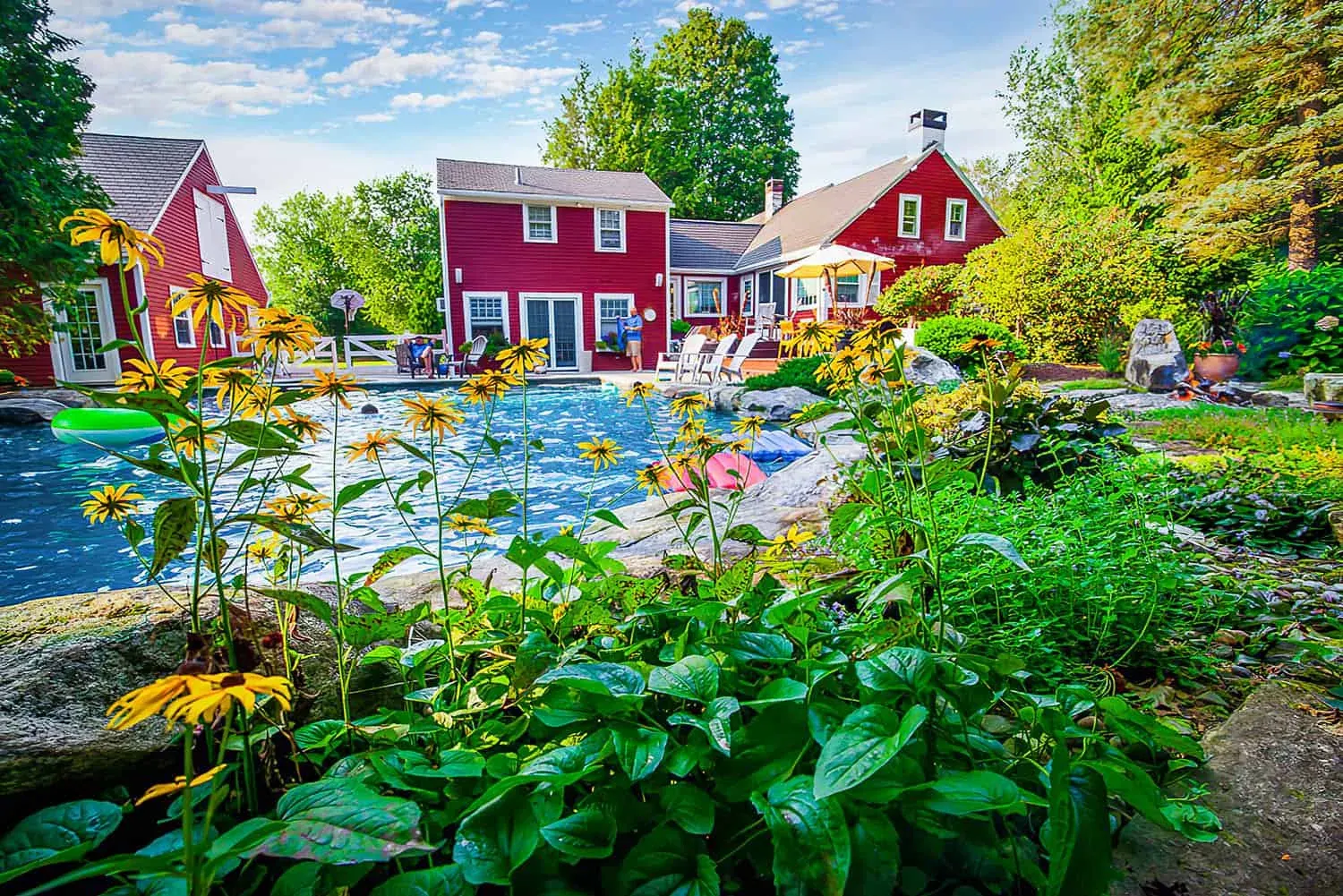
You unlock the cottage in Meredith on a mid-May afternoon and the open lawn looks fine from the deck. Along the sprinkler margin the cool season blend looks pale while the center still stripes clean. On a lot in Center Harbor a rotor now sprays the walk because shrubs grew while boats were still on the lift. Toward Holderness and other Winnipesaukee shorelines the controller still runs April minutes even though guests arrive every weekend now. The issue is rarely the cultivar. It is mow height, water placement, and timing on a lake calendar.
Belknap Landscape provides property maintenance, turf care, and watering service on Lake Winnipesaukee and across the Greater Lakes Region since 1988. Walk the lawn and zones once with the phone in hand. Date the photos. Compare with lake season lawn program when you need fertilizer and weed timing on the same property.
Cool season grass habits on shoreline lots
Kentucky bluegrass and fine fescue blends reward consistent height more than aggressive scalping. If stripes look good in the open lawn and messy along the margin, the deck may still be set for a summer height you have not earned yet. Our first mow timing guidance still applies if the season opener never happened at the correct height.
Raise height on stressed margins before guest weekends. Turf care feeding and weed timing should match moisture on cool season grass beside lake walks.
Irrigation overlap at lawn margins
May is when controllers meet growing leaves and refreshed mulch. Overspray onto lawn edges keeps soil soft while heat arrives. Read May irrigation controller and mulch checklist guide for zone checks and head clearance.
Run each zone at dusk and watch dry mid-slope bands, overspray on walks, and heads blocked by growth. Compare trouble only to similar areas on your lot. Irrigation service visits map overlap fixes versus rebuild items when rotors never matched how the slope is laid out.
Containers, furniture, and turf relief
Chairs and coolers placed on turf for a weekend leave a mat print that can last through Memorial week if the lawn never gets relief. Move heavy pieces to stone or gravel for the week you care about stripes. For sight-line and busy-weekend lawn tips, see May guest sight lines on the lawn.
Mulch, beds, and sprinkler clearance
Pull mulch back from trunks along walks so bark is not blasted onto pavement when zones run. Volcano collars hold moisture against bark all summer. Tree and plant health prefers dated photos when woody plants frame beds that block spray.
When shoreline buffers apply, loop design and permitting in before grade changes toward the water.
Salt, sand, and the lawn toe beside the dock
Even inland lake lots see sand tracked onto the lawn toe from docks and beach bags. Salt from winter plowing can linger in the margin where turf meets stone. Note whether the pale edge follows a spray pattern from a head that hits pavement and grass on the same zone.
Adjusting one zone often costs less than fighting the margin all summer with fertilizer. Ask maintenance to flag heads that need deflector tweaks before guests arrive.
Drainage wet spots that look like drought
Soggy lawn toes after rain often mean downspouts and sprinklers compete on the same band. Read April drainage checks on lake lots after thaw when water still sits wrong after storms. Stone treads beside wet lawn can shift after frost, but fix water placement before you blame the grass.
What to send Belknap before guest season peaks
Send wide shots of sun and shade lawn areas. Send dusk photos of sprinkler overlap with zone names noted. Send town and shoreline context. Attach notes to your next maintenance visit if rhythm already exists.
Belknap Landscape has worked shoreline turf and irrigation since 1988. Mow height, overlap fixes, and steady turf care beat hoping taller grass hides a margin that never got water or height right. Contact us with images when you are ready.