
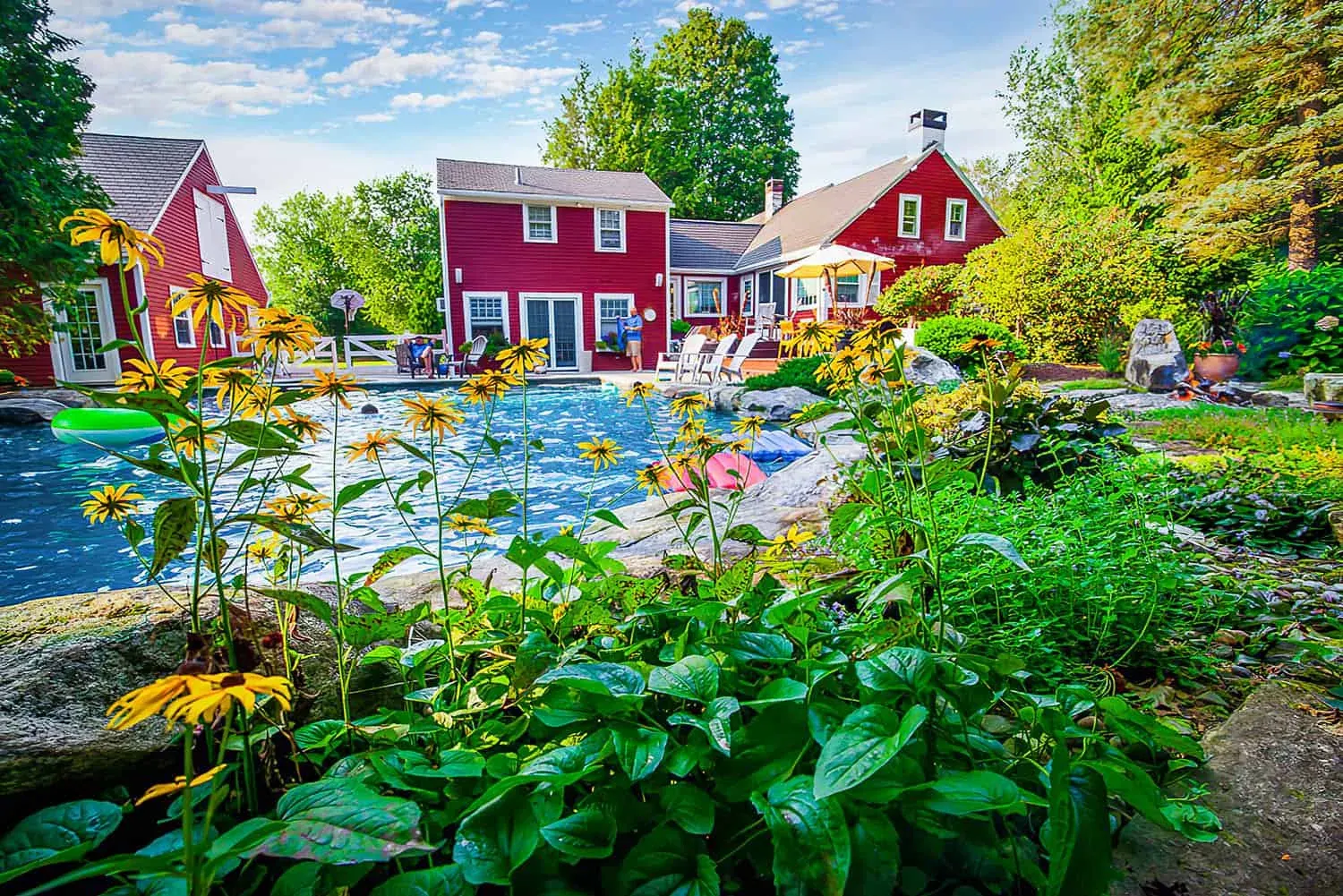
Memorial Day is on the calendar in Moultonborough and Tuftonboro and the first plates from away start showing up in the driveway by Friday afternoon. On a driveway along Wolfeboro and Alton Bay, your yard is suddenly a stage and the same cool season grass you walked past every day in April stands out more to a friend who has not seen the property since Labor Day. Out where the road bends, a row of dandelions you ignored for three weeks looks like a yellow stripe in the photo somebody is about to text the group chat. The grass did not change. The audience did, and the audience came with phones.
This article is for homeowners with a busy guest weekend landing inside the next ten days who are walking the yard the way a guest will walk it on Friday at five. It is not about shame. It is about sequencing, because the property maintenance and small landscape construction fixes that close the gap between yard and host-ready yard can land in time when the request reaches the right desk on Monday rather than at four o'clock on Thursday. Belknap Landscape has worked these busy guest weekends across Belknap and Carroll County since 1988, and the rhythm below is the one our crews actually run.
What Guests Actually Scan First in the Yard
People rarely critique your rarest perennial first. They walk the path from parking to door. They stand where the grill will live while kids cut across the lawn shortcut you stopped noticing months ago. They lean on the wall by the bay window while the bottle of wine moves from one hand to the other. The things they notice in those thirty seconds are ruts from last year's tables, mower stripes that zigzag near the hose bib, dandelion lines along the road frontage, and any lifted paver on the walk from gravel to door. Those four things will live in every photo somebody takes while waiting on Friday.
Walk that arrival sequence once with a trash bag and a phone, in the same order a guest will walk it. Pick up the small obvious litter as you go. Photograph any edge you find that looks like messy, and date the photos by sending them to yourself within the hour. Then decide which observation belongs in a maintenance visit and which needs a real construction fix like a widened landing, a reset bed edge, or a small stone pad where chairs always end up regardless of what the design said.
Lawn Lines and Honest Conversation About Wear
If chairs always return to the same two squares of turf year after year, the right answer is not taller grass that hides the wear for one weekend. The right answer is an overseed window and a compaction relief plan with your crew, scheduled into the part of the season that supports recovery. Hoping for more height to mask a worn patch trains the same pattern deeper every visit, and by August the patch is bare. Our cool season mowing guidance still applies in May busy guest weekends. Social pressure changes the tone of the conversation but it does not change what the lawn actually needs.
Tell the crew if pets concentrate urine along yard borders so seed choices and treatment schedules stay realistic. A breed that runs the same diagonal across the back yard every morning is a real input on a seed selection conversation. So is a children's play area that gets a sprinkler arc only on alternate weeks. The crew that hears those facts in May plans differently than one that learns them in July.
Beds, Mulch, and the Story the Yard Tells at the Mailbox
Road dust and tree pollen dull a mulch refresh faster than the spring tour images on Instagram suggest. A thin top dress often looks cleaner than a deep volcano against trunks, because the volcano draws a guest's eye to a place where the mulch is clearly wrong. Pull bark back to the root flare wherever the design allows. Run a clean shovel-edge along the bed margin rather than chasing color in the middle of the bed itself.
If a bed butts against a stone wall that guests will lean on while plates pass, check the wall for wobble before you refresh the color around it. A loose cap that nobody noticed in March can look neglected on Saturday afternoon when a friend with a cocktail nudges it sideways. Any shoreline-adjacent bed work belongs in a design and permitting conversation early in May, so the project never pauses on the wrong day for a paperwork question that should have been answered first.
Lighting and Readable Treads After the Evenings Stretch
May evenings get long enough that guests navigate steps and bed edges in partial dusk light. Dark treads on the path down to the dock, aimless path glare from a fixture that has tilted over winter, and bulbs that burned out in December and never got replaced all show up the minute somebody carries a plate. If you already read our spring outdoor lighting checklist, use the next two weekends to execute the fixes you already flagged rather than adding new fixtures you will not finish balancing in time.
Aim is more important than count. Three correctly aimed path lights read better than seven that wash the lawn and miss the steps. Wipe the lenses on every fixture. Walk the property after dark with a guest mindset and ask whether the clear path is obvious without explanation.
Wind, Containers, and the Ridge Lots Nobody Copies
Higher benches along the Southern White Mountains edge still see wind in May that flattens new annuals and dries pots in a single afternoon. The right answer is not more water on the controller. It is container choice that matches the exposure. Heavier vessels in the windward corners. Lighter color schemes in the lee. Pots grouped for shelter and watering efficiency rather than scattered across a deck where each one becomes its own watering visit.
If evergreens along the deck show winter burn, photograph the windward face now while the contrast is still honest. Our tree and plant health team works clearer with dated images than with phone descriptions. A bronzed yew that gets the right cut in late May is often a respectable plant by July.
Neighbors, Shared Edges, and Calm Logistics
Guest weekends mean more cars in the cul-de-sac, more music after dinner, and more foot traffic on shared paths between lots. Reset any brush you pushed toward a property line during April cleanup before the neighbor walks the line on Saturday morning. If drainage between two lots has been a quiet argument since fall, address it before the next storm and the next guest weekend amplify the story together. Calm edges in May reduce emergency calls in July.
What to Send Belknap When You Want Help This Week
Send the arrival date and the guest count. Send the paths you actually care about, in the order a guest will walk them. Send the photos taken from where the guest will stand, not from the angle the lawn looks best. Mention if quiet mornings matter for somebody in the house who works nights. Mention if the dock launch is staged so trucks need to route around it. The packet that arrives Monday with that level of detail keeps the visit on schedule for Friday far more often than not.
Belknap Landscape has worked the Greater Lakes Region across maintenance, construction, design, and plant health since 1988. The first dollar fixes the root problem rather than the symptom downstream. Contact us with the property photos when you are ready and bring the short list rather than a long phone call. May is generous when the yard is treated as a host rather than a backdrop, and the small discipline this weekend keeps the color and hardscape investments from fighting each other later in the season.