
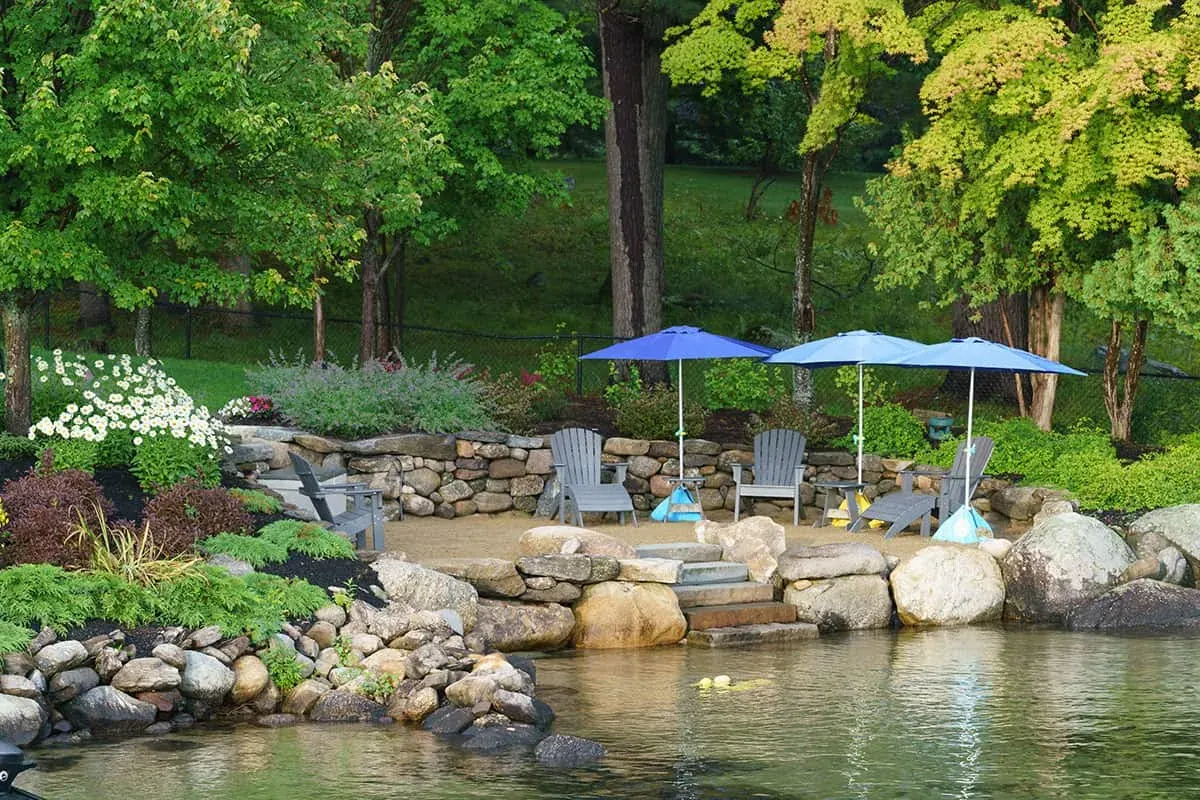
On a quiet cove in Moultonborough, April rain sheets across the lawn margin toward the lake while a low spot beside the garage holds water two days after the sky cleared. On a lot in Tuftonboro an area drain at the lawn edge disappeared under gravel the plow pushed there in February. Out along Wolfeboro and Alton Bay, a perennial bed at the shoreline shows a faint silt line on the mulch after every spring rain. Lake traffic is still light enough to fix drainage before July crowds arrive and before summer growth hides the wet toes.
This article is for homeowners who want to walk the lot once with eyes on water, not only on stone treads. Belknap Landscape has built and maintained waterfront transitions across Belknap and Carroll County since 1988. Landscape construction rebuilds grade and outlets. Property maintenance clears grates and resets surface drainage. Design and permitting carries the shoreland conversation when grade moves toward the water.
Wet lawn spots and perched water after thaw
Shiny soil in low spots after a sunny April day often means water is still perched near the surface even though the air feels warm. Frozen subsoil below a thawed inch on top holds water longer than inland yards on deep sand. Note where silt lines appear on mulch and where lawn toes stay soft while open turf dries.
Connect inland parallels in our soggy yard drainage after snowmelt guide whenever a wet seep crosses the lot on the way to the lake.
Downspouts, roof runoff, and foundation corners
April is when downspouts still dump against corners that summer plantings will hide. Photograph splash lines on foundation plantings and lawn margins before leaves expand. Extensions, swales, and catch basins belong in the conversation when the same corner floods every spring rain.
Browse our drainage and dry stream bed work when runoff needs a defined path instead of sheet flow across turf.
Catch basins and area drains you forgot existed
Late winter plowing can pack gravel over the low intake grate on an area drain or the throat of a catch basin. April rain is the test. Clear visible debris only if you can do it without cutting your fingers on a sharp metal edge that frost lifted. If water sheets across the lawn instead of dropping into the slot, mention it early so we can lift the section and reset the grade before you host a crowd.
Turning circles near drives often show ruts where tires tracked wet stone. Note whether gravel needs a refresh on top or whether base layers shifted underneath. Photograph the rut from above.
Mulch and soil that want to slide toward the water
Steep beds shed fines toward the lake with every spring rain. Note bare spots that appeared since autumn and any silt line on stone at the shoreline. Some fixes are simple edge restraints with a small reset of mulch behind them. Others need a graded swale tied to clean stone behind a low wall.
Some coves see more wave energy in April wind than homeowners expect before boats multiply at Memorial Day. Compare photos to the same angle last spring when the stone toe looks freshly disturbed.
Stone treads as a secondary check, not the main story
Tap each tread lightly with the side of a boot and listen for hollow sound changes since fall. A tread that sounded solid in October and sounds papery in April often sits on a setting bed that lost sand to runoff. Note loose joints where joint sand washed out. If a rail post wiggles, add it to the repair list.
Caps that lifted vertically over the winter often need rebedding rather than only new adhesive at the corner you can see. A uniform lift is a setting-bed conversation. A directional lift is an ice-push conversation and a shoreland conversation at the same time.
Shade trees, drainage, and spring growth
Low branches that brushed hats in July can block sight lines once leaves return. If you need selective pruning, our tree and plant health team can prioritize clearance without topping crowns you want to keep.
Mention boat trailer swing width if you stage near wet lawn margins. Grading plans need room for real use of the property.
Lighting along water access after longer evenings return
Longer evenings start in April even when the air stays cool. Fixtures that caked with grit over winter need adjustment before summer traffic. Review outdoor lighting service pages if you want path light on steps without glare across the water.
Aim is more important than count along a water-access path. Walk the path after dark and ask whether clear treads are obvious without explanation.
What to send Belknap after a heavy rain
Date-stamped photos after a heavy rain help everyone stay factual later. You only need a record of how water moved while wet spots were still visible. Send the address. Send a short video walking the wet margin with audio if something creaks. Send the date of the first big summer gathering you care about.
Belknap Landscape has worked Lakes Region waterfronts since 1988. Contact us with the photo packet when you are ready, and bring the short list rather than a long phone call.