
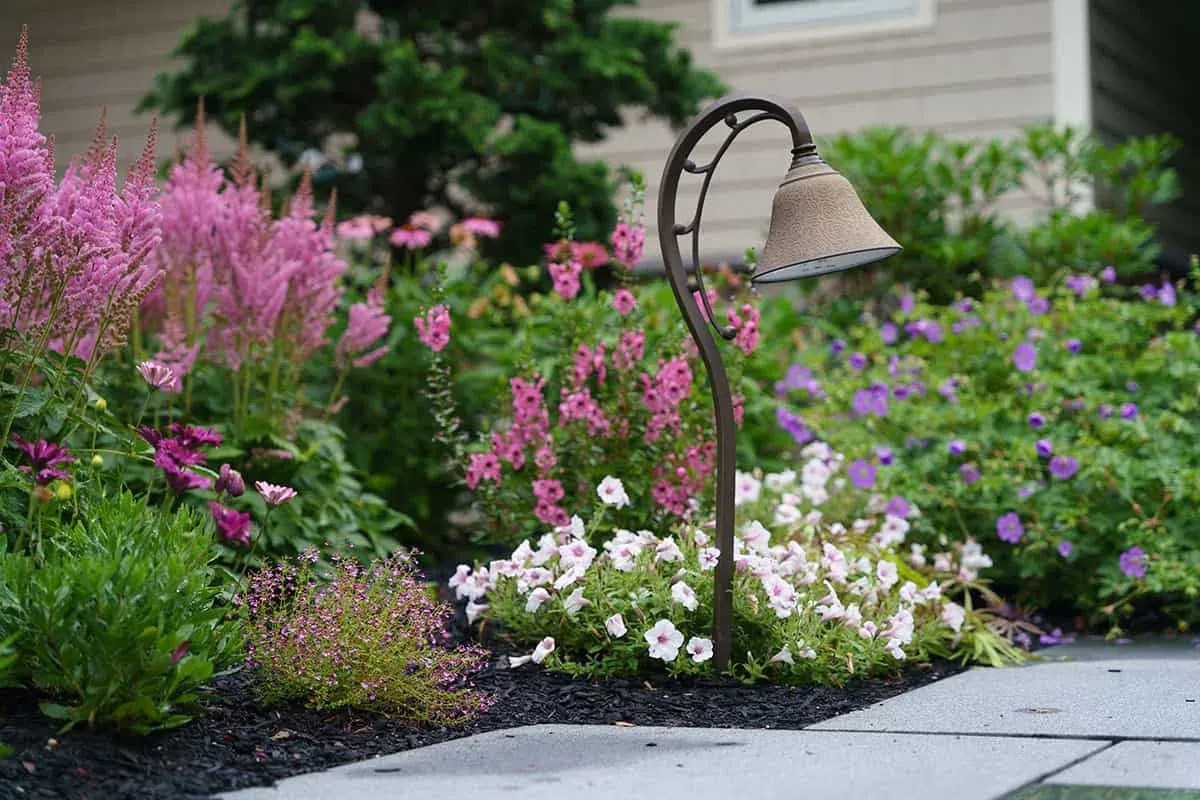
On a lake lot, lighting has a job after dark: show the path, steps, and dock without flooding the water with glare.
Owners still want a few trees or the house lit. They do not want the shoreline so bright that the water and sky disappear. Aim, brightness, and plant growth decide that result more than the product brand on the box.
Belknap Landscape designs and installs landscape lighting across the Lakes Region with that balance in mind. Usable light first. Keep the night view second.
Decide what must be lit before you add what looks nice
Start with safety and access, not with every tree on the lot.
Typical priorities are the drive turnaround, front steps, grade changes, the path to the water, and any outdoor living area the family actually uses after dark. Accent lighting on a specimen tree or stone wall can come next. Flooding the whole lawn is rarely the right first move on a shore lot.
Write those priorities down during design and permitting so the lighting plan matches how the property is used. A second-home schedule may need path light more than party lighting. A full-time residence may want both, in zones that can run separately.
Aim fixtures away from the water and neighboring docks
Glare on the lake is usually an aiming problem before it is a product problem.
Fixtures pointed toward the water, bright uplights with no shield, and path lights aimed into open view corridors all create the same complaint: the night view disappears. Aim light onto the surface you need to see. Keep beams off the water plane where you can. Use shields and lower wattage where a fixture sits near the shoreline.
Neighbors notice this too. A dock light that looks modest from your deck can glare across the cove. Walk the property after dark from the water side and from the road before calling the layout finished.
Our lighting work sits with landscape construction and ongoing care so cable routes, transformer locations, and plant growth are planned together instead of added as an afterthought.
Put path and step light on their own control where you can
Not every fixture needs to run on the same timer.
Path and step circuits should stay reliable when guests arrive late. Decorative tree lights can shut off earlier. A single all-or-nothing schedule forces owners to choose between dark stairs and a lit shoreline they did not want.
During the install, mark transformer location, cable routes, and which zones serve access versus accent. Keep those notes with the property. When a fixture fails two seasons later, the next technician should not have to dig the whole shoreline to find the run.
If irrigation and lighting share bed space, coordinate both. A head that soaks a fixture or a shrub that grows over a path light will undo a careful night layout. Pair lighting notes with irrigation and property maintenance so plant growth does not hide the system.
Recheck aiming after the first full growing season
Plants change lighting faster than most owners expect.
A shrub that cleared a fixture in spring can block it by late summer. A tree canopy can swallow an uplight. New planting after construction can push fixtures into the wrong angle. Schedule a night walk after major growth or after any bed renovation.
Clean lenses, reset aim, and trim only what blocks the intended beam. Do not solve a growth problem by adding brighter lamps. Brighter light on a blocked fixture usually means more glare in the wrong direction.
Browse our work for lake properties where lighting supports outdoor living without overpowering the setting, and see when summer growth hides your landscape lights for the midseason maintenance angle.
Plan for second-home weeks and storm seasons
Many Lakes Region properties sit empty midweek or for stretches of winter.
Timers and photocells should match how the house is used. Path light can stay reliable when family arrives late on Friday. Accent zones can shut down when nobody is there. A schedule written for a full-time residence often wastes energy and draws neighbors' attention when the house is dark.
Storm seasons matter too. Note which fixtures sit near ice paths, dock hardware, or areas that get piled snow from plowing. Keep transformer access clear and dry. If a future dock or patio project is on the calendar, leave cable routes that can expand without ripping out the first install.
When lighting shares a property with new plantings, fold aiming notes into the same handoff you use for watering and pruning. That keeps the night layout from drifting while the beds establish.
What to send us before a lighting visit
Photos at dusk and full dark help more than daytime shots alone.
Mark glare spots, dark stairs, and any view you want to keep. Note if the property is used every weekend or sits empty midweek. Mention future planting or hardscape so cable routes stay open.
Belknap has served New Hampshire lake and mountain properties since 1988. Lighting should make the property safer and more usable after sunset without washing out the water with glare.
For lake-property lighting design, aiming, and repairs, call 603-528-2798 or contact us. More guides live on the news page, including how new plantings need a written handoff into maintenance.