
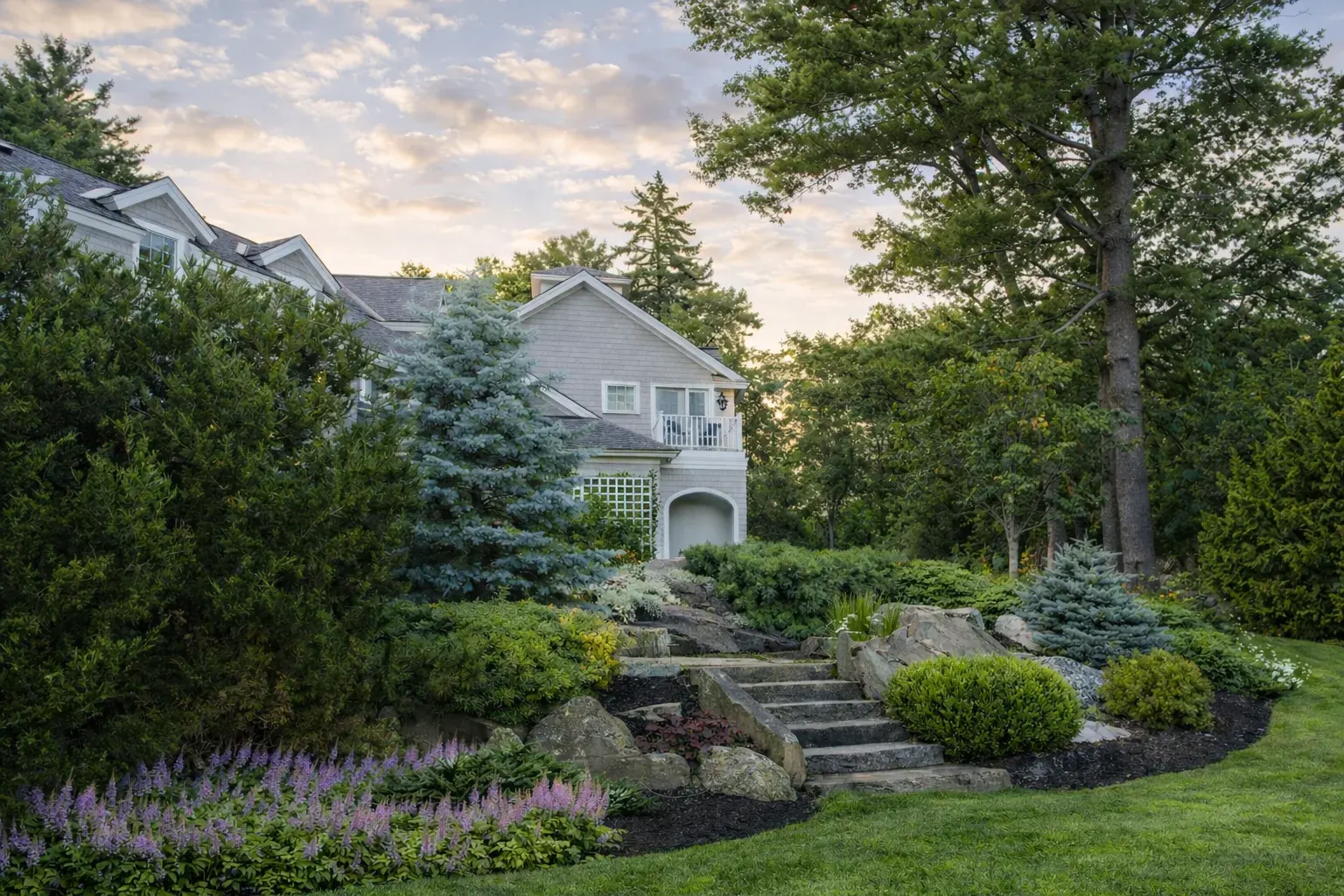
A planting day can look finished when the last shrub is in the ground and the mulch is raked.
For the plants, that day is only the start.
New trees and shrubs on Lakes Region lots need a clear handoff into the property maintenance program. Without that note, the next crew may treat the bed like the rest of the yard, skip establishment watering, prune too early, or leave an irrigation zone on a schedule that was never updated for the new material.
Belknap Landscape manages both construction planting and ongoing property maintenance. The handoff is where those two sides meet. It does not need to be a long report. It needs to be specific enough that someone who was not on the install day can care for the plants correctly.
Write down what was planted and where
Start with a simple map or labeled photo set.
Mark new trees, shrubs, and perennial masses. Note species when known, approximate sizes, and which bed or slope they sit in. Lake and hillside lots often have several micro sites on one property: a sunny drive edge, a shaded north bed, a windy shoreline strip. The same watering habit will not fit all three.
If the install replaced plants that failed, note that too. A dry ridge that already lost material once should not go into the maintenance file as a normal bed.
Our landscape construction work often ends with planting as the visible finish. The maintenance file should still treat those plants as establishment work for the first season, not as mature landscape that can wait for the next seasonal visit.
Separate establishment watering from lawn irrigation
New plantings usually need deeper, more frequent watering than established turf or older beds.
If the property has irrigation, record which zones hit the new plants, whether those zones are turf spray or drip, and what temporary schedule was set after install. If hand watering is required, write the frequency and who owns the hose work between crew visits.
Second-home owners should be direct about this. If nobody is on site midweek, the handoff should say so. A maintenance program can plan around that. A silent assumption that "the sprinklers will handle it" is how new trees dry out while the lawn still looks fine.
Probe the soil around the root ball during the first weeks. Surface mulch can look moist while the root ball stays dry. That detail belongs in the first follow-up note if the crew finds it.
Call out pruning holds and plant health watches
New shrubs and trees should not be shaped like the rest of the property during the first season unless the install team said otherwise.
Write any hold on hard pruning, any stake or guy line that needs checking, and any plant that arrived with a known issue to watch. Belknap's tree and plant health work is separate from routine bed edging. If a tree needs a health visit, put that in the handoff instead of waiting for someone to notice thin leaves during a mow visit.
Also note lighting and utility conflicts. New plantings can block fixtures or sit over sleeves that later phases need open. Our lighting and irrigation pages both depend on plants staying clear of heads and fixtures as they grow.
Name who owns each task for the first ninety days
A useful handoff answers four ownership questions.
Who waters between visits? Who adjusts irrigation after weather shifts? Who reports dead plants or failure to establish? Who decides on replacements versus waiting?
On a full-time residence, the homeowner may own hose watering while Belknap owns scheduled maintenance and irrigation checks. On a second home, Belknap may own more of the midweek work. Either model works when it is written down. Confusion starts when both sides assume the other is watching the same plant.
Browse our work for planting and maintenance projects, and read managing a New Hampshire second home when you are not there every week if the property sits empty between visits.
Close the install with a one-page property note
Before the install crew leaves, capture plant list or map, irrigation zone numbers that serve new material, temporary watering instructions, pruning holds, access notes for steep or shoreline beds, and the date of the first maintenance review.
Keep that note with the property file, not only in one person's email. The next technician should be able to open it and know what is still establishing.
If a later phase of design and permitting or construction will disturb the same area, say so. Temporary planting near a future patio or wall needs different expectations than a finished bed.
For planting installs and maintenance handoffs across the Lakes Region and Southern White Mountains, call 603-528-2798 or contact us. Related reading on the news page includes landscape lighting on a lake property that preserves the night view.