
A second home is supposed to be the place you come back to, not another property that gives you a list of chores the minute you arrive.
That can be easier said than done in New Hampshire. The lawn, planting beds, irrigation, trees, driveway edges, hardscape, and seasonal cleanup all keep moving while the owner is somewhere else. A storm can come through on Tuesday even if nobody plans to be back until Friday. Fall cleanup does not wait for the next holiday weekend, and winter preparation has to happen before the first snow rather than after the owner remembers to ask about it.
We deal with that reality directly in our service-area material. In Bridgewater, where lake camps and seasonal homes are common, we photo-document visits and can line up more involved work with weekends when owners are in town. In Grafton County, we go even further and keep access details, plow-stake locations, snow-stack plans, and seasonal punch lists organized for second-home and investment properties.
That is a different kind of landscape relationship from hiring someone to cut the grass every Thursday.
The first thing to organize is communication
A second-home owner cannot rely on noticing problems from the kitchen window. Someone else has to be looking at the property regularly and know what deserves a call.
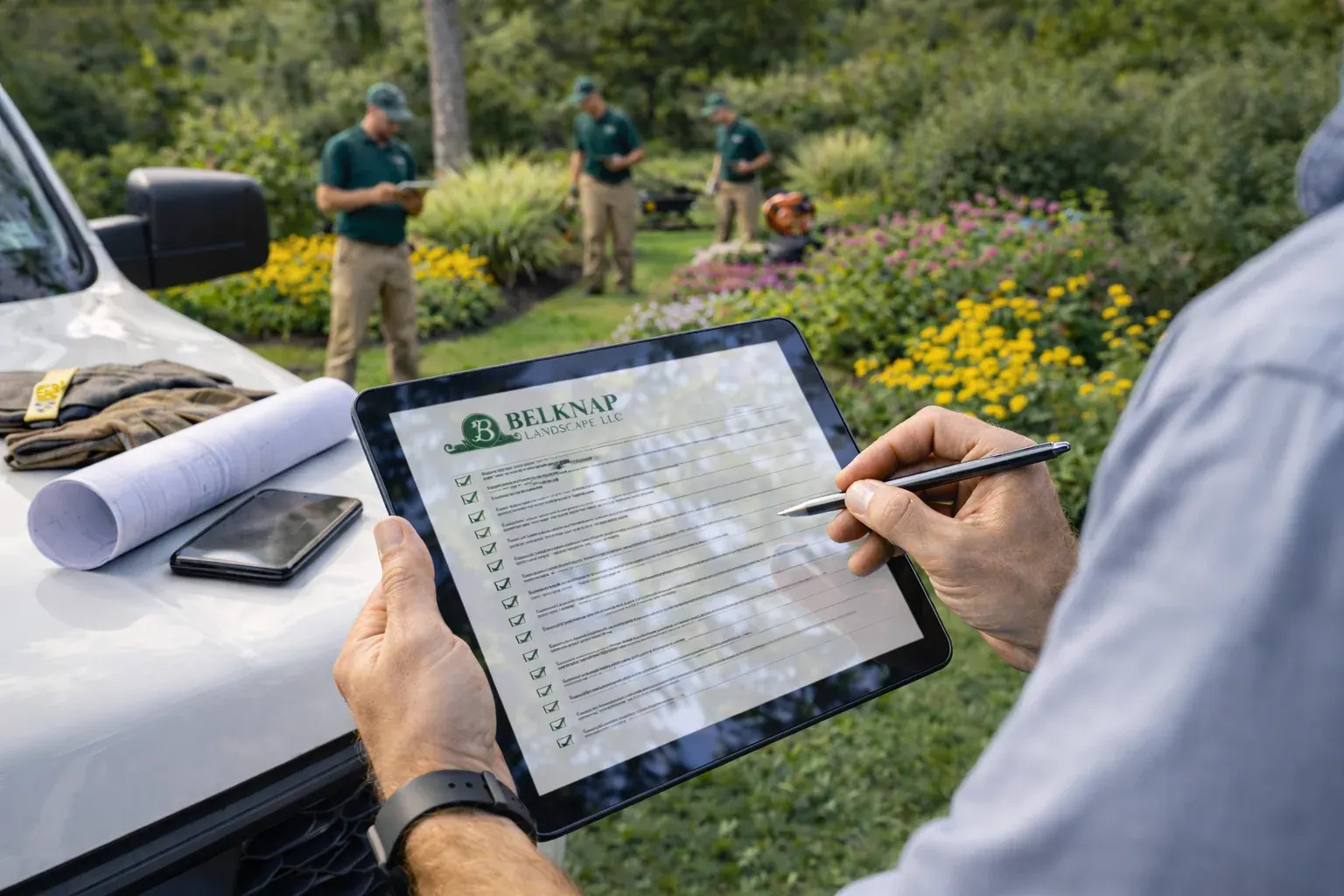
Our property maintenance program assigns a dedicated account manager and those account managers inspect properties on a regular basis. For an owner who lives several hours away, that is useful because the person walking the property already understands how the place normally looks.
The communication does not need to be constant. In fact, getting a message about every ordinary mowing visit would become noise very quickly. What matters is agreeing on what the owner wants to hear about. A damaged planting after a storm may deserve a photo. A small bed that needs routine weeding probably does not. If a patio edge has shifted, a wide picture and a short explanation are far more useful than a message that simply says, "There is an issue out back."
We specifically note photo documentation for second-home clients in Bridgewater. That kind of record can make decisions from another state much easier because the owner is seeing the same thing the account manager sees. Browse property care examples for how maintained sites read between visits.
Give the landscape team the property details once
Seasonal homes often have little pieces of information that seem obvious to the owner because they have been using the property for years. The landscape crew may not know them unless they are written down.
Which gate should they use? Is there a code? Where can larger trucks turn around? Is one driveway branch private? Where do the plow stakes normally go? Where should snow be stacked so it does not interfere with something else when spring arrives?
Our Grafton County page specifically mentions keeping gate codes on file and agreeing on snow-stack plans for second-home and investment properties. It also says plow-stake locations can be documented in advance.
That is the kind of detail worth settling before anyone needs it. A crew should not be trying to track down an owner in another state because a locked gate blocks a scheduled fall visit.
It also helps to tell the account manager when the property will be heavily used. If the whole family is coming for a long weekend, a cleanup or larger landscape task may be more valuable beforehand than the week after everyone leaves. We say intensive work for Bridgewater second homes can be aligned with the weekends owners are there.
Seasonal work should be planned as a calendar, not a series of surprises
New Hampshire property care has a strong seasonal rhythm. Spring cleanup, mowing, bed care, irrigation startup, pruning, fall cleanup, perennial cutbacks, and winter preparation do not all happen at the same time.
Owners who are not on site every week benefit from knowing what will happen next instead of approving predictable work one project at a time.
Our property maintenance service includes mowing, seasonal cleanup, mulching, bed care, pruning, and other recurring work, while we also provide irrigation, turf care, construction, and tree and plant health services. Our Grafton County page specifically mentions scheduling fall pruning, perennial cutbacks, hardscape punch-list work, and snow planning for owners who may be out of state.
That does not mean every second home needs every service. It means the important work can be put on one calendar.
An owner can then separate routine property care from larger decisions. The crew can handle the recurring work that has already been agreed upon, while a patio repair, planting redesign, or larger construction project can wait for a separate discussion. Larger site changes often begin with design and permitting before crews mobilize.
Your arrival should not be the property inspection
The best test of second-home maintenance is fairly simple. When you arrive, do you immediately spend the first hour walking around making a list of everything that happened while you were gone?
There will always be things an owner notices. The property is still a living landscape, and weather changes it. But routine visits, good records, photos when something matters, and a clear seasonal plan mean the owner does not have to rediscover the condition of the property every time the car pulls into the driveway.
That is especially useful in places such as Bridgewater, Holderness, Campton, Plymouth, and other areas we serve where second homes, lake properties, longer drives, mountain conditions, and seasonal ownership are part of the normal client mix.
When a construction project is on the horizon for a hillside or lake-view lot, read building on a sloped New Hampshire property starts before the patio.
We provide ongoing property maintenance throughout the Lakes Region and Southern White Mountains. For owners who need someone looking after the landscape between visits, call 603-528-2798 or contact us through our website. More tips live on the news page.