
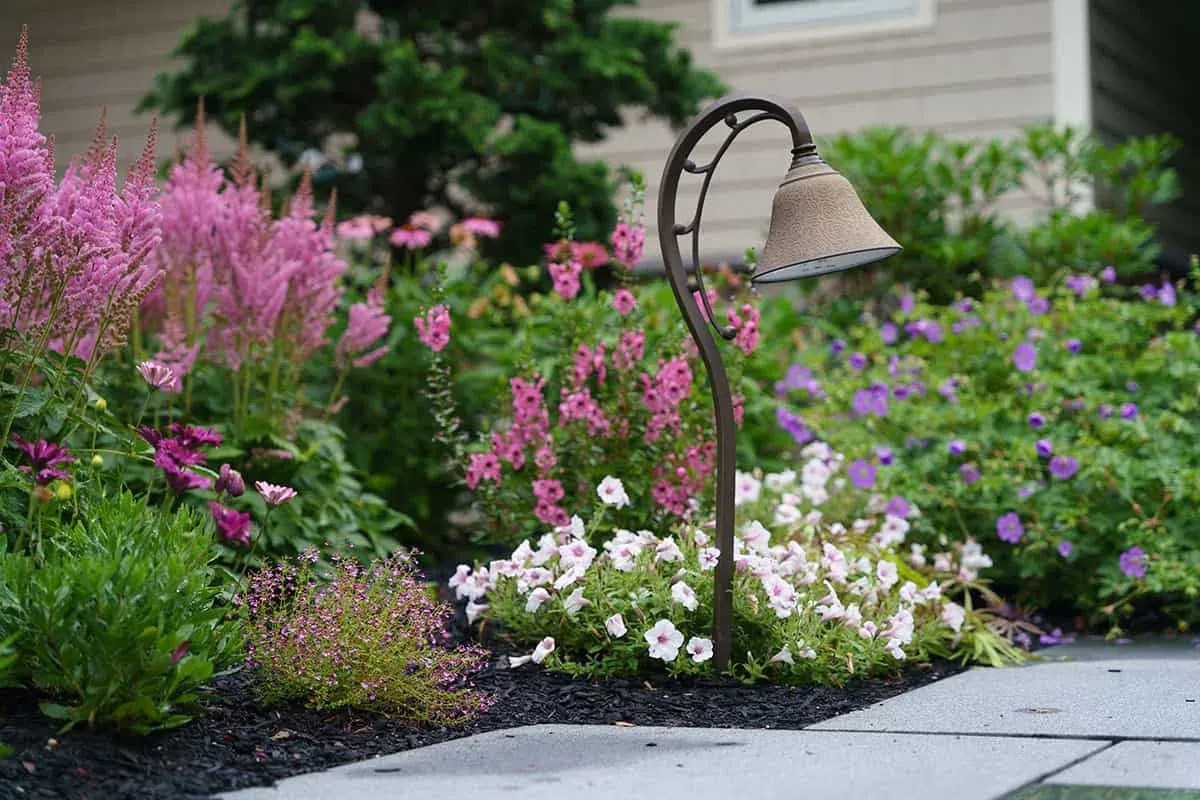
Your landscape lighting looked right back in spring. The front path glowed, the maple stood out after dark, and the steps down to the dock read cleanly. By midsummer on a Lake Winnipesaukee lot, half of that light seems to have gone missing. Hostas have flopped over the path lights. The maple leafed out and swallowed its own uplight. A hydrangea that was knee high in May now sits square in front of the fixture aimed at the front steps. Belknap Landscape handles outdoor lighting and property maintenance across Gilford and Laconia, Meredith, and neighboring towns. This guide covers what summer growth does to a lighting system and what to check before you call.
None of this means the lights failed. In most cases the fixtures still work. Plants simply grew into the beam. A short walk after dark tells you where the light stopped reaching, and that walk is worth more than any close up of a single fixture.
Walk the yard after dark before you touch a fixture
Go out once the sky is fully dark and stand where you would greet a guest. Look for dark gaps along the front path, a tree that used to glow and now reads flat, and steps that fall into shadow. Note each spot on your phone. You are mapping where the light used to land, not inspecting hardware yet.
Compare what you see to what the system did in spring. Our spring outdoor lighting checklist covers the fixture aim and bulb checks people do in April. If a spot read well then and reads dark now, growth is the usual reason, not a dead lamp.
Simple rule: if the light disappeared over eight weeks of summer, look at the plants first, not the wiring.
Perennials and shrubs that grew over path lights
Path lights sit low on purpose. That height works in spring and turns into a problem by July. Daylilies, hostas, ornamental grasses, and low shrubs put on a lot of growth in warm weather, and the foliage leans out over the fixture after a rain. The lamp still burns. The light just hits the underside of a leaf two inches away.
Walk each path light and part the plants around it by hand. If the beam opens up onto the walk once you pull foliage back, the fixture is fine and the bed needs a trim. This is routine property maintenance work, the same visit that edges beds and pulls weeds.
On lake lots, the route from driveway to dock takes the most foot traffic and the most planting pressure. Read our deck and stair lighting piece for how guests read steps at night, then note which path fixtures a trim would bring back.
Tree canopy that swallowed your uplights
Uplights aimed at a maple, birch, or specimen shrub read well when the tree is bare or lightly leafed. A full summer canopy changes the whole picture. The light climbs the trunk and stops at a wall of leaves instead of washing up through open branches. Some trees look better this way, softer and fuller. Others go dark and lose the shape you paid to feature.
Stand back and decide what you actually want the tree to show at night. If the canopy is too dense, selective thinning by our tree and plant health crew can open the crown so light moves through it again. That is a pruning call, not a lighting call. Sometimes the fix is simply moving a fixture back a few feet so the beam clears the lowest branches.
For a refresher on what each fixture type is meant to do, our 5 kinds of landscape lighting post breaks down uplights, path lights, and the rest in plain terms.
Cloudy lenses, algae, and sprinkler spray
Not every dim fixture is a plant problem. Low fixtures near turf catch grass clippings, pollen, and grit all summer. A lens filmed with dust throws far less light than a clean one. Fixtures set in beds that stay damp grow a green haze of algae on the glass. Both wipe clean in seconds once you spot them.
Check whether a sprinkler is part of the story. A head that drifted out of aim can spray a light fixture every night, and the constant water leaves mineral spots and algae on the lens. If dry grass sits beside wet stone near your fixtures, our midsummer irrigation check helps sort spray problems, and irrigation service can move or re-aim the head off the light.
Trim first, then decide what to adjust
Most midsummer lighting complaints clear up with a trim and a wipe, not new hardware. Cut the perennials back off the path lights, thin the canopy over the uplights, clean the lenses, and re-aim any head that soaks a fixture. Walk the yard again after dark. You will often find that the system you already own does most of what you wanted once the plants are out of the beam.
If dark spots remain after the trim, then it is worth talking about fixtures. A bed that filled in over three summers may genuinely need another path light, or a fixture may sit in the wrong place now that the planting has matured. Browse the installed lighting portfolio for how mature beds and finished lights work together. If a walk itself has shifted or heaved and the fixtures no longer line up, that is where landscape construction comes into the plan.
What to photo before you call
Send one wide shot of each dark area taken after dark, a daytime photo of the plant sitting in front of the fixture, and a close up of any lens with film or algae on it. Daytime shots help us see the growth. Night shots show us where the light stops.
Tell us which fixtures you want back first, the path, the front steps, or the featured tree, and mention any guest dates so a trim visit lands before people arrive. List what you want on the same trip: bed trimming, canopy thinning, lens cleaning, or a fixture move.
Contact us across the Greater Lakes Region when summer growth has covered the lighting you set up in spring. A trim and a clean bring most systems back, and we will tell you the few spots where a fixture change is the honest answer.