
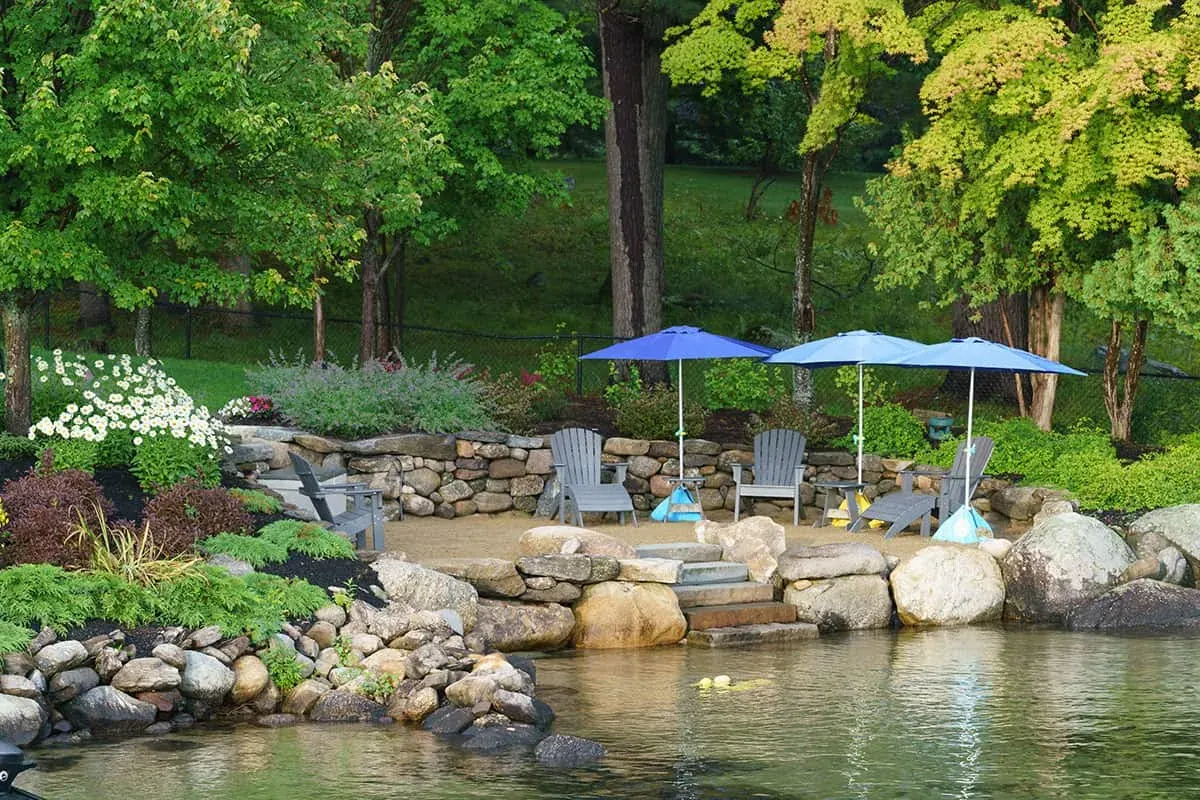
On a deck in Moultonborough the wind has not stopped since Thursday and a pair of tall ceramic urns full of fresh annuals leans against the railing because nobody walked them inside before bed. On a driveway in Tuftonboro a flag on a thin new stick has wrapped around itself twice and the lawn underneath it shows three faint mower stripes where the operator tried to dodge a bare patch and made it more obvious instead. Out along Wolfeboro and Alton Bay, a low mulch ring on an exposed bench bed has thinned to bark dust in two days and the labels on last weekend's perennial flats are starting to bleach in the sun. Late spring around the big lake is wind season before it is anything else, and the calendar does not care.
This article is for homeowners who have a busy guest weekend landing inside the next ten days and are looking at a yard the wind has tested without their permission. It is not about shame for thin turf or pots that tipped. It is about sequencing, because property maintenance and small landscape construction fixes can land in time when the request reaches the right desk early in the week instead of a panic call Friday afternoon. Belknap Landscape has worked these shorelines since 1988, and the rhythm here is built around real wind and real arrival days.
What the late spring Wind Tests First
The wind off the water in season does not flatten everything equally. Fresh annuals in tall urns fail first because their root masses are still in nursery shape and the soil holds water poorly until those roots stretch out. Flags on new sticks rip from the seam. Light mulch on exposed benches lifts and migrates within a day. Container plantings on a corner of the deck where the prevailing southwest fetch lands without obstruction lose two days of water for every windy afternoon. Note which plant in your design is failing and ask whether that plant ever belonged in that pot or that bench in the first place.
Group containers together for wind shelter and watering efficiency. Two big urns sheltering five small pots will lose water at half the rate of seven scattered saucers. Stake or tie fresh stick flags low against the rail post until they have weathered a week. Top mulch beds that face open water with a heavier shred or a clean stone topdress along the windward edge so the lightest material does not migrate across your turf with every gust.
Evergreen Winter Burn Reads Clearest This Week
Yews along a deck rail, arborvitae along a guest path, and rhododendron in the shade area beside the garage all show winter desiccation the cleanest right now. New growth has not yet pushed enough to hide the brown tips, and the contrast between the survived needle and the killed needle is in season light. Walk the evergreens once with the phone and photograph anything that looks brown or bronzed at the windward face. Date the photos by sending them to yourself within the same hour.
That packet is what our tree and plant health team needs to decide whether the plant is dead, partially recoverable with selective pruning, or worth replacing before the next planting wave fills out and hides the damage. A bronzed yew that gets a clean cut in late spring is often a respectable plant by summer. The same yew left until summer looks embarrassing while the guests arrive.
Guest Sight Lines From Parking to Door
People notice edges before they study rare plants. Nobody on the way from the driveway to the front door is squinting at the cultivar tag on a hellebore. They are scanning ruts at the lawn margin, dandelion lines along the road frontage, lifted pavers on the path from gravel to door, and the small messy collar of crumbled bark where a winter snow stake stood until spring. Those four things will live in every photo a guest takes while waiting for the door to open.
Walk that arrival sequence once with a trash bag and a phone, the way a guest with a wine bottle and a tote will walk it on Friday at five. Pick up the small obvious litter. Photograph the edges and any lift you find. Decide which observations belong in a maintenance visit and which need a real construction fix such as a widened landing, a reset bed edge, or a new area of path stone where the gravel keeps migrating into the turf.
Dock Paths and Stone That Still Moves in season
Ice in winter and spring rain already tested the treads on the path down to the water. late spring traffic adds sway. The cooler going down. The kid on the way back up. The dog. The friend in flip flops who has not been here since Labor Day. None of that traffic is gentle. A stone tread that rocks a sixteenth of an inch under your bare foot will rock half an inch under a guest who is not paying attention to it.
Tie any loose joint and any cap that shifted to the drainage observations from our April drainage checks on lake lots after thaw guide if water is still aiming the wrong way after storms. The two conversations belong together, because a tread that moves in season is almost always a tread the water has been working on since the first thaw, and the rebuild has to address both.
What to Send Belknap When You Want Help This Week
Send the arrival date and the count. Send the wind exposure notes from the deck and the driveway, written in the order you walked them. Send the photos taken from where guests actually stand, not from where the lawn looks best. Mention if quiet mornings matter for anyone in the house who works nights. Tell us if the dock launch is staged so trucks need to route around it. The packet that arrives Monday with that level of detail keeps the visit on schedule for Friday more often than not.
Belknap Landscape has worked the Greater Lakes Region since 1988. The first dollar fixes the root problem rather than the symptom downstream. Contact us with the property photos when you are ready, and bring the short list rather than a long phone call. See our outdoor lighting services when arrival paths stay dark after you fix beds and wind damage. The yard does not need to be perfect. It needs to be honest, and the work that closes the gap between the two looks like care from the street every time.