
You walk behind the garage in Gilford or along the side yard in Meredith thinking the ground should be firm by now, but your boots still sink in. Neighbors on the same street have dry grass while you have a shallow puddle that takes days to disappear. That difference is not bad luck. In Belknap County and around Lake Winnipesaukee, spring is when hidden drainage problems turn into soggy lawns, soft spots along the driveway, and water creeping toward steps or a walk out basement wall.
Why Spring Shows the Problem So Clearly
All winter, snow and ice sit on top of the ground. Soil under packed snow stays cold and saturated. When temperatures climb, meltwater runs off roofs, pavement, and plow piles all at once. If your lot is flat, if the soil is dense clay, or if downspouts dump next to the foundation, that water has nowhere to go fast. In lakeside towns like Moultonborough and Wolfeboro, a high water table can make normal spring wetness last longer. Inland lots in Laconia or Belmont can still hold water if grading sends runoff from a driveway or patio straight into a low corner of the lawn.
The key idea is simple: your yard is not broken because it rained. It is telling you that water is arriving faster than it can soak in or flow away in a harmless path.
Signs the Wet Spot Is More Than Normal Spring Mud
Every lawn in central New Hampshire is soft for a few days after a big thaw. You should pay attention when the same area stays spongy after dry weather, when you see moss or weeds taking over one low strip, or when water stains appear on basement walls after heavy rain. Another clue is ice forming in the same depression every winter, which means water collects there before it freezes.
What to look for on a quick walkthrough
- Grass that smells sour or looks yellow in patches that never fully dry
- Soil that squeezes out water when you step on it a week after the last snow
- Gutters or downspouts that splash directly onto flower beds or against siding
- A sidewalk or patio that acts like a dam, blocking water from reaching a lower area
- Ruts along the plow edge where salt and compaction killed grass and left bare soil
None of these mean you need an emergency fix on the spot. They mean it is worth planning before summer projects, while crews can still move soil without tearing up a full lawn in use every evening.
Fixes That Match Real Lakes Region Yards
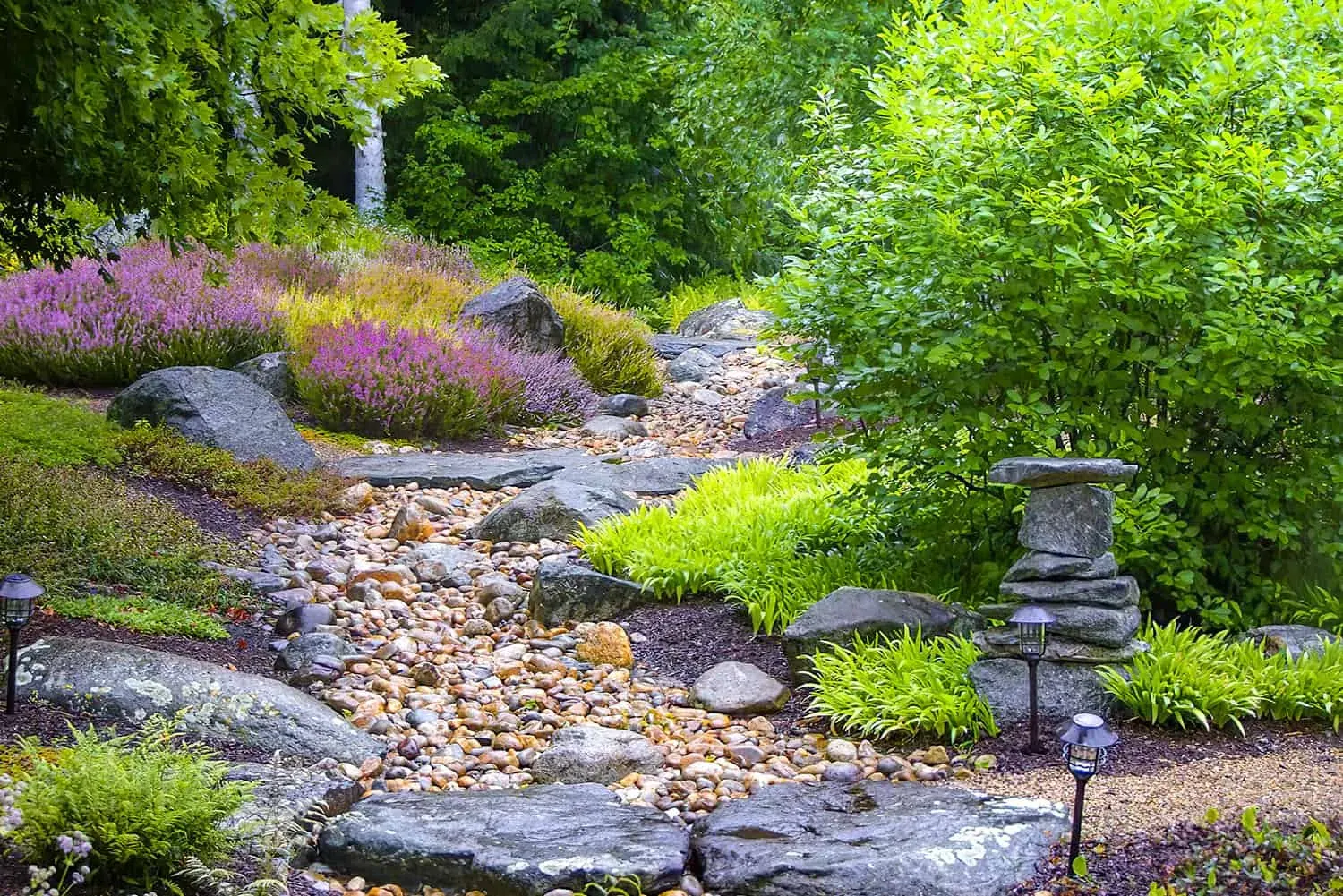
Belknap Landscape has worked across the Lakes Region since 1988. We see a few patterns again and again. Sometimes the answer is regrading a swale so water crosses the lawn in a shallow channel instead of sitting in one bowl shaped dip. Sometimes roof runoff needs to be piped farther out, past the foundation and past the edge of a paved walk. On steeper lots toward Center Harbor or Holderness, a dry stream bed or a planted drainage swale can move water downhill without looking like bare ditch work. Larger jobs tie into landscape construction so walls, walks, and drainage are designed together instead of fighting each other.
Smaller steps many homeowners take first
- Add downspout extensions so roof water lands at least several feet from the house
- Avoid piling mulch or soil against siding; leave air space so walls can dry
- Do not drive trucks or heavy equipment over saturated lawn; that squeezes air out of soil and makes puddling worse
- Seed bare compacted strips in late summer or early fall when grass establishes best in New Hampshire
When water crosses a property line, or when a wet area sits against your foundation, it is time to talk with a professional. The right fix might be a subsurface drain, a reworked patio edge, or a dry stream that looks like a natural part of the yard. Our drainage and dry stream bed page shows how those features can look on real sites.
How This Fits With the Rest of Your Landscape
Drainage is rarely only about pipes. It connects to turf, beds, trees, and hardscape. A good plan asks where water starts, where you want it to go, and what you want to walk on and look at when the job is done. If you already rely on a property maintenance program, sharing photos of wet spots in March helps your team schedule grading or bed repair before the growing season is in full swing. If you are planning new walks or walls, design and permitting should account for runoff from day one so you are not cutting trenches through a new patio five years later.
We serve property owners throughout Belknap County, Carroll County, and nearby Grafton County towns. If you are unsure whether your wet yard is a quick gutter fix or a larger grading project, contact us. We can walk the site with you, explain options in plain language, and help you move water where it belongs so you can use your whole yard after the snow is gone.