
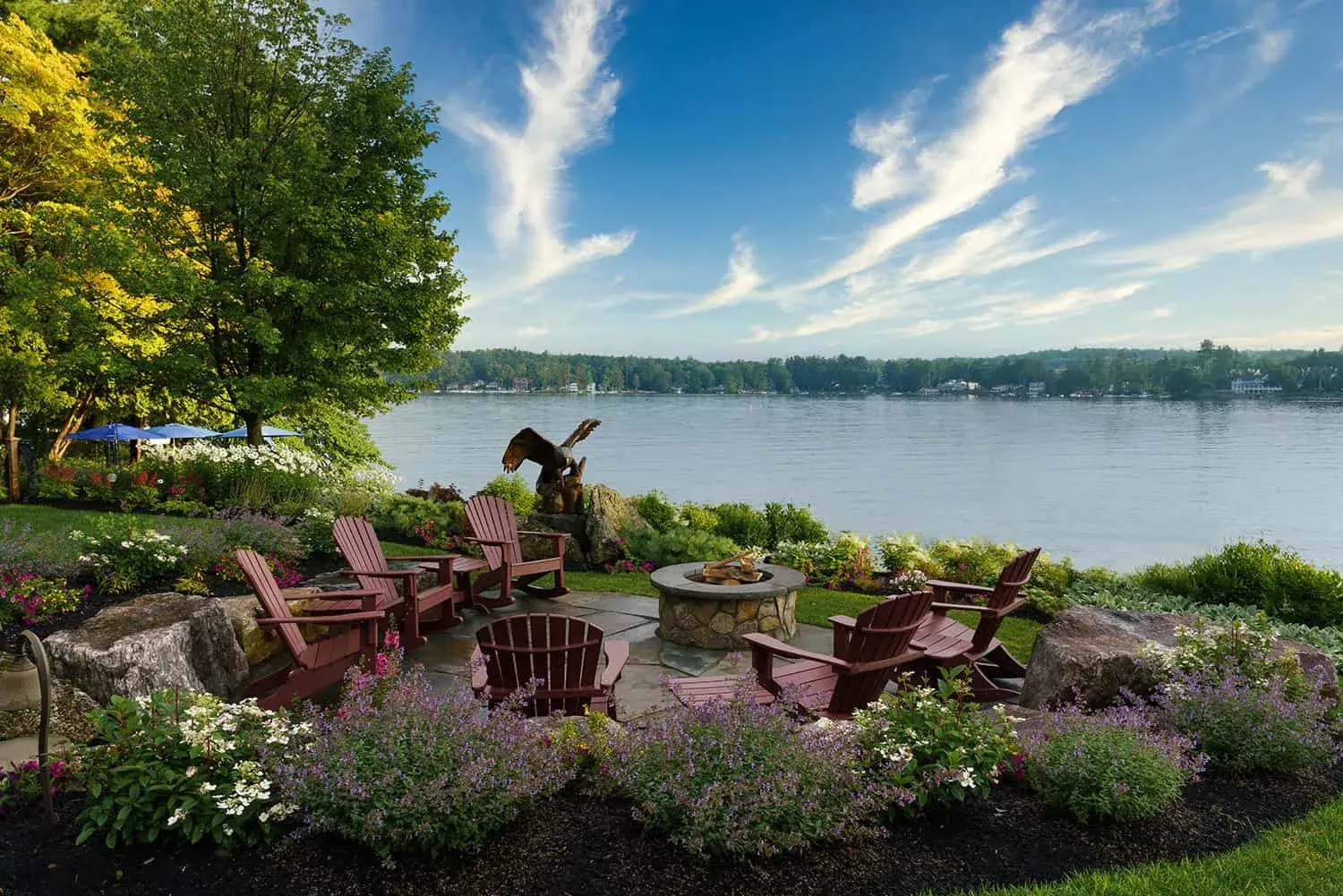
Native plantings along a New Hampshire lake easement must filter runoff and survive ice, wind, and deer.
Shoreline buffers on Winnipesaukee are not generic flower beds. They protect water quality and meet setback rules. The right natives earn that strip without annual replant.
Belknap Landscape plans native buffers through design and permitting and installs them with landscape construction crews who know lake soils.
Read the easement before you pick plants
Association or town rules may list height limits, mowing bans, and species guidance. A beautiful planting that violates buffer width fails inspection even when it looks green.
Note sun, ice push, and wind off the lake. South coves bake and dry. North coves hold frost into late spring. Plant for the spot, not the catalog photo.
Map utilities, views, and paths the family still needs. Easements are not no-touch zones everywhere. They are managed strips.
Wolfeboro and Meredith associations sometimes update plant lists. Check the current sheet before you order material.
Choose natives that handle lake edge stress
Shrubs such as winterberry, sweet gale, and shrubby willow hold bank and feed birds without heavy fertilizer. Grasses and sedges stabilize toe slopes.
Avoid invasive look-alikes sold as quick color. They escape into the lake and create long removal bills. Belknap sources from growers who label origin.
Pair new plantings with tree and plant health plans when mature canopy shades part of the easement. Understory light changes the list.
Salt spray from winter roads reaches some lake roads more than owners expect. Pick salt-tolerant species on those fronts.
Prepare soil without tearing the buffer
Compacted lake sand needs organic matter worked in shallow layers. Deep rip near the bank can loosen sand into the water.
If lawn ran to the water, remove turf in strips and stage mulch and plants on the upland side. Keep sediment out of the lake during install.
Irrigation during year one may use drip along the landward edge only. Irrigation design should not spray across the buffer into the lake.
Biologs or coir at the toe can hold sand while roots knit. They are temporary, not decoration.
Maintenance handoff for second homes
Year one needs weed control and watering when drought hits. Year three should need light cutback and woody release only.
Write species names on the property maintenance sheet so a crew does not shear blueberries like hedge.
Fall leaf mulch can stay in the buffer when it is not smothering crowns. Rake lawn leaves out of waterward grasses before ice.
Photo the buffer each October so spring crews see what survived ice push.
Layer plants from water line to upland lawn
Low sedges and rushes take splash and ice at the toe. Mid height shrubs frame views without blocking required sight lines to the lake from the road.
Tall canopy trees that already meet rules stay as anchors. New work fills gaps between keepers instead of clearing the whole easement.
Mix bloom time so the strip feeds pollinators from ice out to hard frost without annual bedding replant.
Water quality jobs the easement still has to do
Runoff from roof, drive, and lawn should slow in the buffer before it reaches sand and cobble at the shore. Roots and duff do that work better than rip rap alone.
Capture leaves before they mat in the waterward grasses. One heavy mat can smother seedlings you planted in June.
Belknap reviews outlet paths from upland landscape construction so new hardscape does not bypass the buffer you just planted.
Guest traffic and dock lines through native beds
Stone treads through the easement beat trampled sod that erodes straight to the lake. Treads sit above soil so roots can spread under the path.
Dock carts need a firm edge. We set that edge landward of fragile shrubs so wheels follow the same line each week.
Record planting depth on each species at install. Roots planted too deep in wet sand rot the same way crowns rot in mulch.
Belknap stages plants on upland lawn until soil prep is done so stock does not dry on the hot dock cart path.
What to send before an easement planting plan
Send town, lake name, easement width if known, and photos from shore and upland. Note deer pressure and existing trees to keep.
Say if a dock path crosses the strip. We may split zones: stable shrubs lake side, low traffic gravel or stone upland.
List any fertilizer or pesticide limits in your association docs.
For native shoreline and easement planting on Meredith, Gilford, Laconia, Moultonborough, Wolfeboro, and nearby lake lots, call 603-528-2798 or contact us. More notes live on the news page and in our our work galleries.