
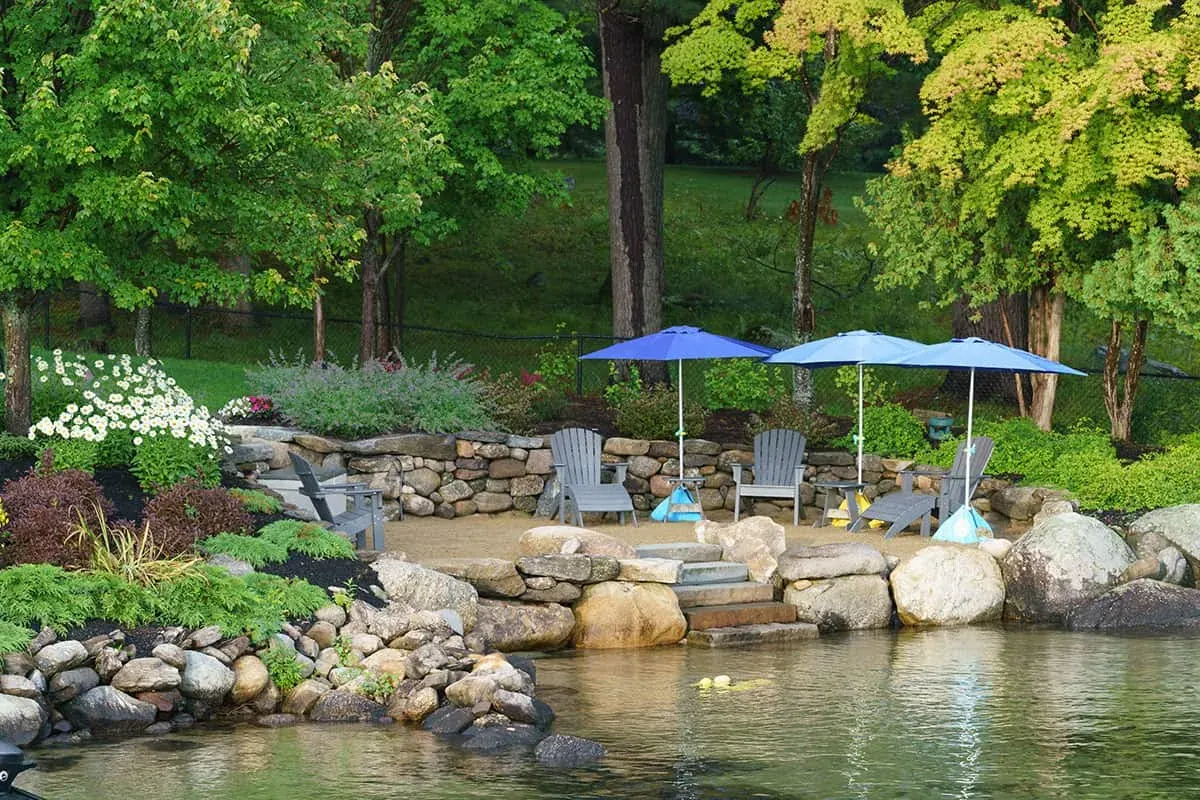
You pull into Meredith after winter and three systems shout at once: a rotor still misting the walk, beds that look tired from the drive, and stair lighting that leaves the middle tread black at dusk. Lake house rhythm is not four separate panic calls. Belknap Landscape serves Lake Winnipesaukee and Meredith and Center Harbor with property maintenance, watering service, turf care, and outdoor lighting that share one calendar when you check the property once before guest season gets busy.
Property walk order that saves repeat visits
Start at dusk after watering heads run: slope toes, deck stairs, parking margins, then open lawn. That sequence matches how guests experience the property, not how the zone clock lists zones.
design and permitting when drawings or shoreline rules apply before you invest in color beside zones that still need overlap fixes.
Watering clarity on bench and flat mixes
Many Meredith lots combine bench face, flat lawn, and shaded lake side on one clock. Split exposure notes on your sketch before seasonal adjustment on your run-time clock changes.
watering service maintenance aligns head tweaks with property maintenance so mowing lines do not undo overlap fixes the same week annuals go in.
Turf beside traffic and lake margins
Cool season grass thins where feet cut from parking to deck without detouring. turf care plans account for compaction, shade, and watering overlap at margins.
Busy guest weekends stack mowing and watering stress on the same lawn margins. Photograph margins before you seed on thin turf.
Beds, mulch, and reflected heat off deck faces
South facing deck rails cook pots and perennial edges while lake breeze keeps open lawn cooler than planters suggest. tree and plant health supports woody plants that frame beds without blocking spray.
property maintenance refreshes mulch depth aligned with head checks so bark is not blasted onto walks when zones run.
Lighting before peak guest evenings
Dark treads and glare into bedroom windows show up the minute someone carries luggage after dark. outdoor lighting portfolio examples show tread readable without lighting neighbor blinds.
Pair fixture plans with landscape construction when landings need reset before stakes go in on frost heaved soil.
One call with photos and guest dates
contact Belknap Landscape with paths guests use, zone photos, and weekend dates when stairs and beds must look crisp from the drive.
Browse Belknap installed work on drainage work and landscape construction when grade and water placement compete with color on the same lake front.
Lake rhythm habits that differ from inland yards
Bench lots above Meredith cool faster at night than flat inland parcels, yet south deck faces still cook pots and turf margins on the same afternoon. Compare damage only to similar exposure on your shoreline, not to a photo from a wind sheltered cove.
Note guest parking, dock traffic, and sprinkler overlap on the path to the water before you call. Belknap Landscape schedules visits from those notes on real lake house properties every season.
Cool nights pull moisture back toward the lake while hot afternoons pull it the other direction on the same slope. Timer edits should respect that push and pull instead of copying inland overlap from a flat suburban lot.
Programs that respect hosting weeks at the lake
Annual color, irrigation edits, and mulch refresh and irrigation tweaks spike on the same holiday weekend when cousins park on grass. Name a starting fix on paper so you do not soak a compressed walk while trying to revive a dry area beside the deck.
Bring wide shots of stressed lawn margins, wet spots on turf, and dry areas beside railings when you schedule a visit. A calm rhythm now prevents the rescue pass on the weekend you wanted the dock clear for boats.
Lighting, turf, and irrigation visits stack faster when you share arrival dates for guests and the path they actually use from the driveway to the shore.
Shoreline walks Belknap teams use on hillside homes
Photograph overlap where spray hits dock planks, gravel pull offs, and the first ten feet of lawn on the same zone. Those images save a second trip when a technician can see the full picture from the bench instead of only the controller screen.
Belknap Landscape matches lake house calendars to real sun on Winnipesaukee and Squam shorelines. Compare stressed lawn strips to your own reference area with the same deck sun and shade before you chase an inland fix that never fit this lot.
Before you call Belknap Landscape about meredith lake house rhythms for beds, sp
Photograph the band that changed first on your lot before you edit every zone on the controller. Lakes Region hillside homes rewards small surgical changes on the exposure that actually failed, not a global clock shift copied from a neighbor on different soil.
Bring those images plus cookout or travel dates when you schedule with Belknap Landscape. Crews working across Meredith and Winnipesaukee shorelines see dock paths, deck heat, and cool nights on real visits every season. A written priority list beats a reactive product pass that looked smart from the driveway while roots were struggling underneath.
South deck faces cook pots and turf margins while cool lake nights pull moisture back toward shore on hillside homes. Compare annual color stress only to similar railing exposure on your cove.