
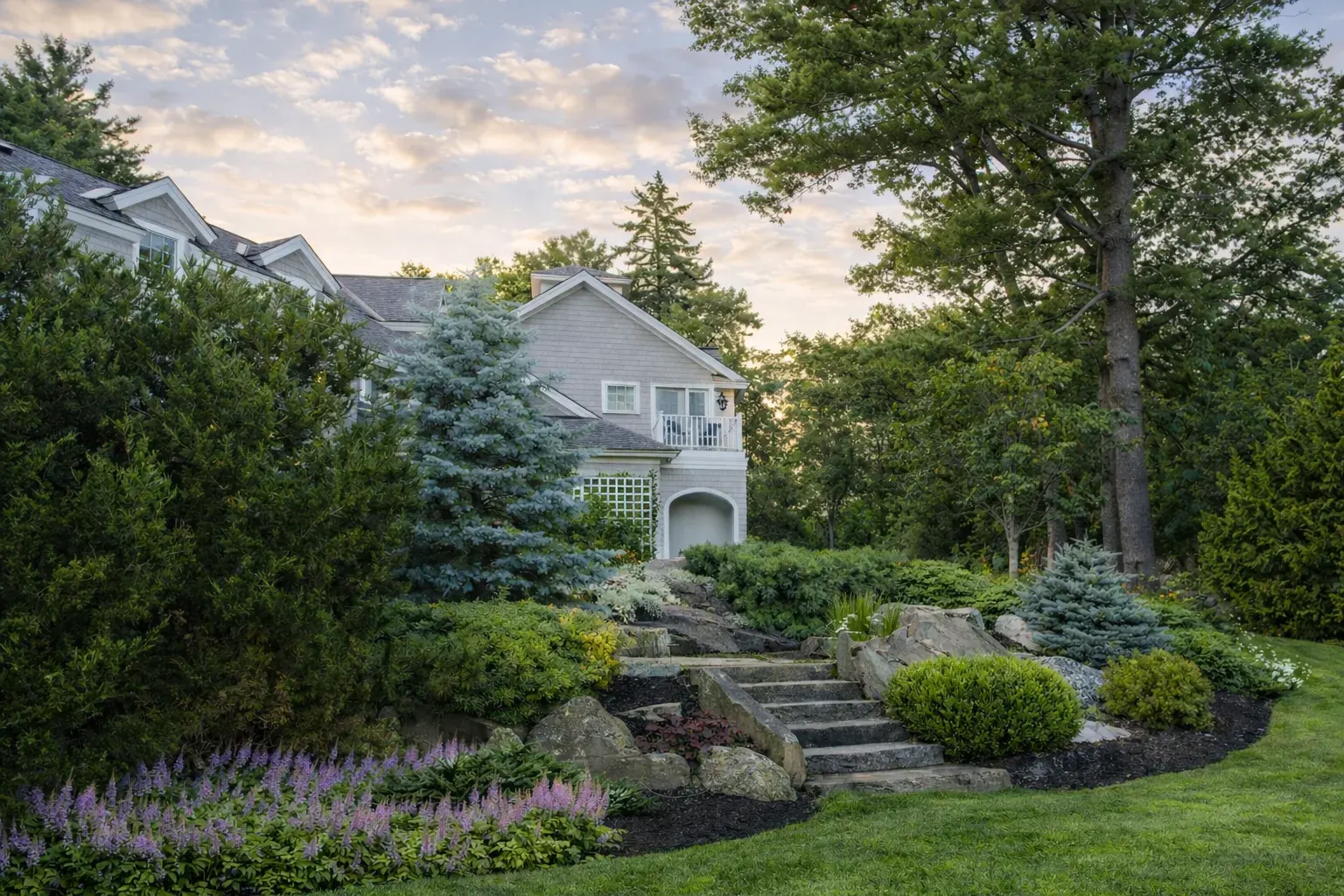
Landscaping services can feel like one giant wish list: fix the lawn, clean up the beds, rebuild the walk, maybe add a patio while you’re at it. But if you’ve ever pulled into a driveway in Meredith after a hard rain and noticed muddy ruts, washed-out mulch, or shrubs swallowing the front walk, you already know the first move matters more than the biggest move.
Start with the part of your property that causes the biggest daily frustration
The easiest way to sort out your first landscaping project is also the most honest: notice what annoys you every single time you come home, head outside, or welcome somebody onto the property. Not the dream project. Not the Pinterest project. The thing that keeps showing up in daily life.
Sometimes that problem is obvious. Water sits near the garage after every rain. The front steps feel uneven. The lawn along the driveway turns into a muddy strip every spring. Other times it is less dramatic but still worth attention, like overgrown foundation beds that make the whole place look neglected even when the house itself is in good shape.
Here’s the thing: you do not need to fix everything at once. In fact, trying to do that usually leads to scattered work and a bigger bill without much real improvement. The better approach is to start with the issue that affects safety, drainage, access, or curb appeal every day. Once that is solved, the rest gets easier to sequence.
Know what falls under landscaping services before you hire anyone
A lot of frustration starts with hiring for the wrong category of work. “Landscaping services” sounds broad because it is broad. Some jobs are about upkeep. Some are about construction. Some are really plant health issues in disguise.
If you know which bucket your project falls into, conversations get simpler and estimates get more useful. You stop asking for a full redesign when the real need is drainage correction, and you stop paying for routine maintenance when a failing retaining wall is the actual problem.
Lawn care and routine maintenance
This is the keep-it-looking-good category. Lawn care and routine maintenance usually includes mowing, edging, trimming, blowing off hard surfaces, seasonal cleanup, mulching, light pruning, and general upkeep of beds and turf.
This kind of service matters more than people admit. A tidy property reads as healthy, even before any major improvements happen. Clean edges, fresh mulch, and trimmed shrubs can make a place feel cared for fast.
But routine maintenance is not the same as fixing underlying problems. If the lawn is dying because water sits in one area for three days after rain, mowing will not solve it. If a shrub keeps declining because the soil drains poorly, trimming it back is only cosmetic.
Hardscaping and outdoor structure work
Hardscaping is the built side of the landscape. Patios, walkways, retaining walls, stone steps, fire pits, edging, and other non-plant features all fall here. These projects shape how you move through the property and how the space holds up over time.
In many cases, hardscape should come earlier than decorative planting. If the front walk is cracked and uneven, or if a slope needs a retaining wall to keep soil in place, it makes no sense to freshen beds first. Built structures set the framework. Plants are usually the finishing layer.
Hardscape also tends to involve more planning, more labor, and a bigger budget, which is why it helps to know whether your project is truly structural or just aesthetic.
Planting, beds, and plant health services
If your first thought is “the plants just look off,” this is probably where the issue lives. Planting and bed services can include installing shrubs, trees, and perennials, redesigning bed layouts, pruning, soil improvement, fertilization, and treatment for pests or disease.
Plant health care sounds technical, but the idea is simple. It is targeted care for trees, shrubs, and other landscape plants that are struggling. Yellowing leaves, dead patches, insect damage, sparse growth, and repeated failure in the same bed often point to something beyond basic maintenance.
That matters in the Lakes Region, where short growing windows, winter damage, and wet spring conditions can expose weak site conditions fast. A property can look fine in June and tired by late July if the planting was never right for the site.
Prioritize drainage and grading first if water is causing trouble
If water is causing problems, drainage comes first. Every time.
Fresh mulch, new sod, and beautiful shrubs will not win a fight against bad grading or uncontrolled runoff. Water has a way of undoing expensive work with almost no effort at all. Ignore it, and the rest of the landscape becomes harder to maintain, more expensive to repair, and less reliable season after season.
Standing water kills grass roots, weakens plantings, stains hardscape, creates muddy footpaths, and can even affect nearby foundations. In winter, the same water turns into ice in the wrong spots. In spring, it brings washouts and soft ground. A pretty landscape sitting on poor drainage is like putting a fresh coat of paint on a leaking ceiling.
Signs your property has a drainage problem
Some drainage issues look dramatic, but plenty start small. Puddles that linger more than a day after a normal rain are a clue. So is mulch that keeps washing into the lawn or driveway.
You might notice bare spots where grass never fills in, or paths that turn slick and muddy even when the rest of the yard dries out. Ice buildup in a walkway area can point to runoff that has been moving there all along. Basement dampness near a problem corner outside can also be part of the same story.
Another giveaway is repetition. If you keep fixing the same low lawn area, replacing the same struggling plants, or cleaning the same muddy splash along a foundation bed, the property is telling you something.
What landscaping services can fix drainage
Drainage work can sound complicated, but the basic tools are straightforward. Grading reshapes the slope so water moves away from the wrong places. A swale is a shallow channel that guides runoff across the property. A dry creek bed does a similar job but uses stone for both control and appearance.
French drains collect and move subsurface water through gravel and piping. Downspout routing carries roof runoff farther away so it does not dump right at the base of the house. Erosion control stabilizes loose soil on slopes or washout areas with stone, plantings, fabric, or structural support.
The best fix depends on why water is collecting, not just where you see it. That is the catch. The puddle is often the symptom, not the source.
Put safety and access ahead of looks
A property should be easy to move through without thinking about it. Once you start noticing where footing feels awkward, where guests hesitate, or where visibility is poor near the drive, that is no longer just a cosmetic issue.
Broken walkways, uneven steps, slippery slopes, loose retaining blocks, and overgrown entries should jump to the front of the list. So should blocked sightlines near driveways or paths used after dark. If you manage a rental, commercial site, or multi-unit property, these issues matter even more because more feet are using the same trouble spots.
Pretty landscaping cannot make a risky layout feel welcoming. Safe access can.
High-priority areas to inspect first
Start with the routes that get used the most. Front walks and main entry paths are obvious candidates, but side entries, garage-to-door routes, and service paths matter too. Anywhere groceries get carried, guests arrive, or deliveries happen deserves a close look.
Stairs should feel solid and predictable underfoot. Retaining walls should not bulge, lean, or shed material. Driveway edges should hold shape instead of crumbling into beds or lawn. If there is a pool area, pay attention to slick transitions and worn paving. On commercial properties, entrances, dumpster enclosures, and parking lot islands often reveal wear faster than the rest of the site.
The simple test is useful: if somebody unfamiliar with the property walked it at dusk, would anything make the route confusing, awkward, or risky?
Decide whether your first goal is cleanup, correction, or a full upgrade
Not every landscape problem deserves a major project. Some places just need a hard reset. Others need a real fix below the surface. A few need a complete rethink because too many things are failing at once.
Putting your property into one of these three tracks helps you avoid overbuying. It also makes it much easier to talk with a landscaping services provider without drifting into vague wish-list territory.
When a cleanup is enough
Sometimes the property works fine but looks tired. Beds are weedy, edges have disappeared, shrubs need pruning, leaves and debris have piled up, and mulch has broken down into a dull, patchy layer. That kind of place can improve dramatically with cleanup alone.
This is often the best first spend when the structure of the landscape still makes sense. You get quick visual payoff without committing to construction or redesign. For many homes, especially before listing a property or heading into summer, cleanup does more than expected.
When something needs correction
Correction means something is not functioning the way it should. Water collects where it should not. The lawn has recurring dead areas. A wall is failing. A path is awkward. Shrubs keep struggling in the same bed. Tree roots may be lifting pavers, or a grade may be pushing runoff toward the house.
This kind of work is not always glamorous, but it is usually the smartest place to spend money first. Correction protects the rest of the landscape and stops repeat problems that maintenance alone cannot solve.
When it makes sense to plan a full redesign
A full redesign makes sense when the issues are bigger than one bed or one repair. Maybe the traffic flow around the property never worked. Maybe the planting is outdated, oversized, and hard to maintain. Maybe different areas were added over the years and now the whole place feels patched together.
If several parts are failing at once, stepping back can actually save money. Instead of fixing one isolated issue after another, you create a plan that sequences drainage, hardscape, planting, and maintenance into one coherent direction.
Match your first landscaping service to how you use the property
The right starting point depends on how the property functions in real life. A full-time home has different priorities than a seasonal cottage near the lake. A commercial site needs consistency and safety. A steep waterfront lot may need stabilization before anything else.
Use matters just as much as appearance.
For full-time homes
At a year-round home, daily use should drive priorities. Entry appeal matters because you see it all the time. Drainage matters because spring thaw and heavy rain turn small issues into ongoing messes. Lawn health matters if your outdoor space is part of everyday life.
Low-maintenance planting is often a smart first move after core issues are handled. A landscape that looks good without constant babysitting tends to age better, especially when schedules get busy.
For seasonal or vacation properties
A vacation property has a different rhythm. Nobody may be onsite for stretches, which means overgrowth, storm debris, and small problems can get worse before anybody notices. In that setting, reliable maintenance and cleanup often come before beautification.
Durable materials matter too. Paths, steps, edging, and beds should hold up without constant attention. If the property is closed up for part of the year, drainage and runoff control also deserve extra attention because damage can build quietly.
For commercial properties and multi-unit spaces
Commercial and shared-use properties need to look intentional and stay consistent. Visibility at entrances, safe access from parking areas, and a clean professional appearance usually rise to the top.
Snow-season wear is part of the equation in New Hampshire. Plow damage, salt stress, compacted snow piles, and spring recovery all shape what should be fixed first. If the landscape always looks rough in April and May, that usually points to a maintenance and durability issue, not just a cosmetic one.
For waterfront or sloped properties
Waterfront and sloped sites play by different rules. Erosion, runoff, unstable footing, and washouts can undo nice-looking work in a hurry. Access paths need to feel secure, and plant choices need to help hold soil instead of just filling space.
On these properties, stabilization often comes before beauty. Retaining work, erosion control, drainage correction, and smart grading usually set the stage for everything else.
Get clear on budget before you choose the first project
Budget matters, but not just in the obvious way. The real value of setting a budget early is that it forces sorting. What absolutely needs fixing now? What would improve daily life next? What can wait without causing damage or frustration?
That keeps the “do everything” impulse from taking over. It also helps you phase work without ending up with a property that feels half-finished forever.
What usually costs less upfront
Lower-cost starting points are usually cleanup-focused. Pruning, mulching, edging, debris removal, bed refreshes, and routine lawn service often give visible improvement without major construction or specialty materials.
These projects are good choices when the property mostly functions well and just needs care. They can also buy time while you plan bigger correction work.
What tends to cost more but solves bigger problems
Higher investment projects usually involve labor, materials, excavation, or structural changes. Drainage work, grading, retaining walls, patios, walkways, irrigation installation, and mature planting typically land here.
That does not mean you should avoid them. It means you should treat them like foundational work. Spending more on a project that solves the actual problem is usually better than spending less three times on the wrong thing.
How to phase landscaping work without redoing it later
Good phasing follows the logic of the site. Drainage before lawn. Hardscape before planting. Grading before irrigation. Tree placement before finishing beds. This order is not glamorous, but it saves real money.
If you skip ahead, you often pay twice. New lawn gets torn up for drainage piping. Freshly mulched beds get trampled during walkway work. Irrigation has to be rerouted after grading changes. The trick is to make sure each phase supports the next one.
Ask these questions before hiring a landscaping services provider
A good estimate is not just a price. It should reflect clear thinking about what your property needs first and why. If a provider cannot explain that in plain English, the fit may not be right.
This part matters because landscaping proposals can look similar on the surface while covering very different work.
What is the first problem you would fix on this property?
Ask this directly. It is one of the fastest ways to see whether somebody is diagnosing the property or just pricing tasks.
A useful answer should be specific. Not “clean things up a bit,” but “fix runoff along the front walk first because it is washing the bed and creating ice in winter.” That kind of answer shows priorities, not just services.
How will the work hold up through new hampshire seasons?
Seasonal stress is real in the Lakes Region. Freeze-thaw cycles shift pavers and steps. Heavy rain exposes drainage flaws. Snow load can damage shrubs and edges. Spring mud reveals weak grading. Short growing windows affect planting success.
If recommendations do not account for these conditions, the plan is incomplete. Materials, timing, and plant choices should all make sense for real local wear.
Who handles design, installation, and ongoing maintenance?
Some projects need one provider from start to finish. Others may involve design from one source and maintenance from another. The point is to know who is responsible for what.
This helps prevent the classic handoff problem where a landscape gets installed beautifully but no clear plan exists for watering, pruning, seasonal cleanup, or plant monitoring after the job is done.
What can be phased, and what should be done together?
This question uncovers dependencies. Some work can wait without issue. Some should absolutely happen as part of the same phase.
For example, if grading changes will affect bed layout or walkway height, those pieces should be coordinated. If cleanup can happen now while a larger hardscape plan waits, that can make sense too. You want sequencing, not guesswork.
Watch for common mistakes that waste money
Most landscaping mistakes are not dramatic. They are just expensive little detours. A nice-looking install in the wrong place. A low quote with half the scope missing. A new landscape with no maintenance plan.
Spotting these early can save a lot of frustration.
Starting with plants before fixing the site conditions
New shrubs and fresh mulch are tempting because the visual change is immediate. But if drainage is poor, soil is compacted, sun exposure is wrong, or grading pushes water into the bed, those new plants are being set up to struggle.
Plants should come after the site can support them, not before.
Choosing the cheapest quote without comparing scope
One estimate may include excavation, disposal, prep work, finish grading, and cleanup. Another may not. On paper, one number looks lower. In practice, you may not be comparing the same job at all.
Scope matters more than sticker price. Read line by line and make sure you understand what is included.
Ignoring maintenance after installation
Even a great install needs follow-through. Trees need watering. Shrubs need monitoring. Perennials need seasonal cutback. Lawns need the right care for recovery. Beds need touch-up attention as materials settle.
Without maintenance, a strong installation can lose shape surprisingly fast. Landscaping is not a one-and-done purchase. It is more like buying a good pair of boots. They last a long time if you actually take care of them.
Trying to solve every issue in one visit
This is where projects go sideways. Too many goals packed into one phase usually means rushed decisions and a budget spread too thin.
The better move is sequencing. Fix the right first thing, then build from there. A property almost always improves faster that way.
Use a simple first-priority checklist for your property
If everything feels equally messy, a simple sorting rule helps. Think in layers: function first, use second, beauty third.
That order is not exciting, but it works.
Fix first if it affects water, safety, or access
Start here if you notice drainage problems, trip hazards, failing retaining walls, blocked entries, erosion, unstable slopes, or routes that feel risky to use. These issues affect how the property works and can lead to damage if ignored.
If water is moving the wrong way or people cannot move comfortably through the space, that is the first priority.
Improve next if it changes everyday use
Once the property is stable and safe, move to the problems that affect comfort and routine. Maybe the lawn needs recovery. Maybe a patio gets no relief from afternoon sun. Maybe privacy is lacking, or maintenance takes too much effort because the layout is fighting you.
These projects improve how the property feels to live with day to day.
Beautify last once the foundation is solid
Decorative planting, accent lighting, expanded beds, and finishing touches belong here. This is the layer that makes a property feel polished, but it works best when the underlying site issues are already solved.
Beauty lasts longer when function comes first.
Best first landscaping services by situation
If you want a quicker way to choose, match the first service to the problem you actually have. Not the dream outcome, just the current reality.
If your yard looks tired but mostly works
Start with cleanup. Pruning, edging, mulch, weeding, and a bed refresh can make a surprising difference when the bones of the property are still good. This is often the best first spend for places that look neglected but do not have major drainage or access problems.
If water keeps showing up where it should not
Start with drainage assessment, grading, and runoff control. Do this before lawn work, before planting, and definitely before cosmetic upgrades. Water wins every time if you let it stay in charge.
If the property feels hard to use
Start with access and layout. Walkways, steps, patio connections, slope stabilization, and circulation fixes can make the space feel better almost immediately. If moving through the property is awkward, that should take priority over making it prettier.
If you want a polished look with less upkeep
Start with simplification. Defined beds, mulch, lower-maintenance planting, durable hardscape, and the removal of fussy problem areas can give you a cleaner look without adding chores. Sometimes the smartest upgrade is not adding more. It is editing what is already there.
What to do next before booking landscaping services
Before asking for a full wish-list estimate, walk the property once with one question in mind: what is the single issue you notice every time? Take a few photos, make a short note about where water sits, where footing feels off, or where the place always looks messy, and start there.
That one small step changes the whole process. Instead of shopping for every possible landscaping service at once, you begin with the priority that will make the property work better right away. Try that first, then let the rest of the plan follow.
Disclaimer: This article is for general informational purposes only. It is not professional advice, a quote, or a service agreement. Conditions at your home or property may differ; contact a qualified professional for an on-site evaluation before making repair, safety, or spending decisions.