
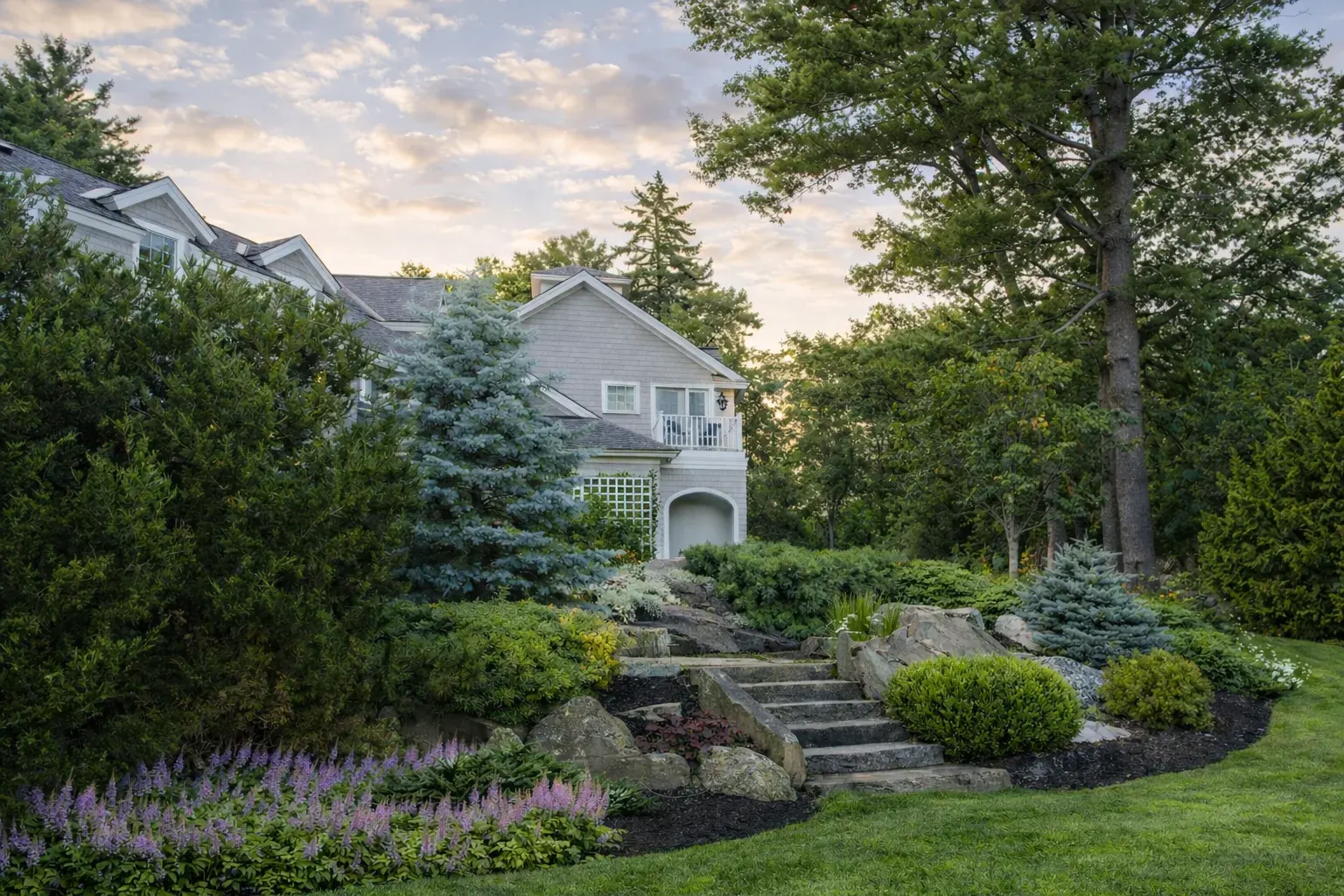
If “landscape construction” sounds like one of those terms that could mean anything from mowing to a full backyard rebuild, that confusion is normal. Landscape construction is the building side of outdoor property work, and once you know what falls under it, it gets much easier to tell what your yard actually needs.
What landscape construction actually means
Landscape construction means physically building, reshaping, or installing parts of your outdoor space. Think patios, walkways, retaining walls, planting beds, grading, drainage fixes, steps, and outdoor living areas. It is the hands-on work that changes how your property functions and how it holds up over time.
Here’s the thing: this is more than “just landscaping.” Mowing keeps a lawn tidy. Landscape construction changes the structure of the space itself. If your yard stays soggy every spring, your front steps feel awkward, or your patio is sinking in one corner, that is usually a construction issue, not a maintenance one.
What counts as landscape construction
A lot of outdoor projects overlap, which is why the term gets fuzzy. The simplest way to think about it is this: if the job involves building, excavating, reshaping, or installing something permanent or semi-permanent, it usually falls under landscape construction.
Hardscapes
Hardscape means the non-living built parts of your yard. That includes patios, walkways, stone steps, retaining walls, fire pits, edging, and improvements near a driveway approach or entry path.
These are the features you walk on, sit on, or use to move through the property. A paver patio, for example, is not just a decorative surface. It needs excavation, a stable base, proper slope, edge restraint, and careful installation. The same goes for a walkway or wall. If it is built from stone, block, brick, or concrete and meant to last, it fits here.
Site work and grading
Site work and grading deal with the shape of the land. That can mean leveling an area for a patio, correcting a slope that sends water toward the house, preparing a base for steps, or reshaping part of the yard so it drains better.
This matters a lot in the Lakes Region of New Hampshire, where snowmelt, spring mud, and freeze-thaw cycles can turn a small grading mistake into a yearly problem. A yard that looks fine in August can become a mess in March if the slope is wrong. Good grading is one of those things you barely notice when it is done right, and definitely notice when it is not.
Drainage and water management
Drainage work is often the hidden part of a project, but it is usually the part that saves the most frustration. This can include French drains, dry wells, swales, downspout routing, and runoff control around lawns, patios, foundations, or beds.
The catch is that water always wins. If runoff has nowhere to go, it will pool, wash out mulch, creep toward the foundation, heave pavers, or leave parts of the lawn unusable. A drainage fix may not be the prettiest line item in a proposal, but it is often the reason the visible parts of the project keep working.
Planting and softscape installation
Softscape means the living parts of the landscape, such as trees, shrubs, perennials, sod, and new planting beds. In a lot of projects, softscape comes after the structural work is finished.
That order matters. You do not want to install beautiful new plantings and then tear them up to regrade the yard or run drainage underneath. In a landscape construction project, planting is often the finishing layer that softens the built elements and makes the whole space feel complete.
What landscape construction does not usually include
Landscape construction is usually separate from routine maintenance. Weekly mowing, seasonal cleanup, regular pruning, lawn treatments, and plant health care are typically ongoing services, not construction work.
Some properties need both, but they solve different problems. Construction creates or repairs the bones of the space. Maintenance keeps those spaces healthy, clean, and attractive after the build is done.
Where construction ends and maintenance begins
A simple handoff helps: construction builds or reshapes the space, maintenance keeps it looking good and functioning over time.
So if you install a new patio and fresh planting beds, that is construction. Keeping weeds out of the beds, mowing around the patio, pruning shrubs, and treating lawn issues later on, that is maintenance. The two work together, but they are not the same thing.
Common projects you might call landscape construction
The term makes more sense once it is tied to real problems.
Fixing a backyard that stays wet
If your backyard holds water for days after a storm or turns mushy after snowmelt, surface patching usually will not fix it. Adding a little soil or reseeding the lawn might make it look better for a minute, but the problem is still underneath.
A real fix often involves grading, drainage, and sometimes rebuilding part of the yard so water moves away instead of settling in low spots. If the area near your foundation or patio keeps getting soggy, this kind of work is not cosmetic. It is the difference between a yard you avoid and one you can actually use.
Building a patio or walkway that lasts
A good patio starts below the surface. Excavation, compacted base material, proper slope, edge restraint, and careful installation all matter more than the pavers you see on top.
Think of it like putting a house on a bad foundation. Even beautiful materials fail if the support underneath is weak. That is why one patio stays flat for years while another starts shifting after two winters. The visible finish gets the attention, but the prep is what decides whether the project lasts.
Adding structure to a sloped property
A sloped yard can feel awkward fast. Furniture does not sit right, mowing becomes annoying, erosion shows up after storms, and parts of the property go mostly unused.
Landscape construction can turn that slope into something useful with retaining walls, steps, terraces, and erosion control. Instead of one hard-to-use hill, you get defined spaces that feel safer, cleaner, and easier to enjoy. Sometimes that is the difference between “nice view” and “space you actually spend time in.”
Refreshing the front entry
Not every project is a full backyard overhaul. Sometimes the biggest improvement is right out front, where an old walkway, uneven steps, tired planting beds, or rough transitions from driveway to door make the whole entrance feel worn out.
A rebuilt front walk, cleaner bed lines, updated plantings, and better lighting can completely change how the property feels. And in places like Meredith or Laconia, where a January freeze can leave front entries slick and awkward, better layout and footing are not just about looks. They make daily life easier.
How a landscape construction project usually works
Knowing the process helps you spot the difference between a real plan and a vague promise.
Planning and site evaluation
This stage is about understanding the property before anything gets built. The site gets measured, slopes get checked, drainage trouble spots get noticed, and practical questions come up about how you want to use the space.
Access matters too. A backyard with a narrow gate or steep side yard may limit what equipment can get in, which affects how the project is done. Good planning is not just about design, it is about knowing what the site will actually allow.
Design, materials, and scope
Next comes deciding what the project includes. That means layout, materials, plant choices, finishes, and the line between what gets done now and what can wait for a later phase.
This part should feel clear, not foggy. If you are choosing between natural stone and pavers, or deciding whether a wall needs steps built into it, the scope should match the real problem you are trying to fix, not just the nicest-looking idea on paper.
Excavation, base prep, and installation
This is the build phase, and honestly, it is the least glamorous part to watch. Soil gets moved, bases get dug out, drainage gets installed, materials get compacted, and the structure starts taking shape.
But this is where the project is won or lost. The underground work decides whether pavers settle, walls hold, and water moves where it should. If the prep is skipped or rushed, even a great-looking finished surface can fail surprisingly fast.
Final walkthrough and ongoing care
At the end, the finished work should be checked for grade, fit, drainage flow, stability, and clean transitions between materials and planted areas. You should also know what kind of upkeep the new space needs.
That might mean simple things like resetting polymeric sand down the road, watering new plantings properly, watching for drainage flow after major storms, or keeping leaves from clogging a swale. New Hampshire seasons put outdoor work to the test, so a little follow-through matters.
Why proper construction matters more than a quick cosmetic fix
A pretty surface can still fail if the structure underneath is wrong. That is the plain truth.
Proper landscape construction gives you better drainage, safer footing, longer-lasting materials, more usable space, and fewer repeat repairs. It also helps curb appeal, but that should not be the only goal. If your front walk looks nice but still ices up badly, or your patio looks level but holds water, the project is not really doing its job.
Quick cosmetic fixes often cost less upfront because they skip the hard parts. The problem is that the hard parts are usually the whole point. Good construction saves frustration because it fixes causes, not just symptoms.
Questions to ask before hiring for landscape construction
You do not need to know every technical detail. But a few smart questions can tell you a lot.
What problem is actually being solved?
Start here. Is the job mainly cosmetic, structural, drainage-related, or some mix of all three?
That answer shapes everything else. If the real issue is runoff, but the proposal only talks about new stone or fresh mulch, something is off. A good project scope should connect directly to the actual problem on the property.
How will the project handle water?
This question matters almost every time. Patios, lawns, walls, planting beds, and walkways all perform better or worse depending on where water goes.
In a region with heavy rain, snowbanks, and spring thaw, water management is not a side detail. It is part of the build. If nobody can explain the drainage plan in plain English, that is worth noticing.
What prep work is included?
Two proposals can look similar on the surface and be completely different underneath. Ask about excavation depth, base materials, compaction, drainage layers, edge support, and cleanup.
The trick is simple: the prep tells you how serious the project is. Nice materials matter, but the hidden work is usually where the real value lives.
Common misunderstandings about landscape construction
A few misconceptions show up all the time.
“Is landscape construction the same as landscaping?”
No. Landscaping is the broad umbrella term. It can include design, planting, mowing, lawn care, maintenance, drainage, and construction.
Landscape construction is the build-and-install side of that bigger category. It is the part that changes the physical structure of the outdoor space.
“Can construction and lawn care come from the same provider?”
Yes, often. Some companies handle both project work and ongoing maintenance.
That can make life easier because the same property gets cared for after the build is done. New plantings, fresh grading, and hardscape edges usually benefit from somebody already familiar with the site.
“Is this only for big properties or major renovations?”
No. Small jobs count too.
A short walkway, rebuilt steps, a new bed edge, a drainage correction, or a modest retaining wall all fall under landscape construction. You do not need a giant estate or a full redesign to need real construction work.
How to tell if your property needs landscape construction
If water pools after rain, pavers are settling, a slope feels unusable, soil keeps washing out, a retaining wall is failing, or your front path never feels quite right, your property is giving you a pretty clear signal. The same goes for outdoor areas that technically exist but never really work the way you want them to.
Try one simple thing after the next hard rain: walk your property slowly. Notice where water sits, where footing feels awkward, where mud keeps showing up, and where a small build project could fix an annoyance you deal with all the time. That is usually where landscape construction starts making sense.
Disclaimer: This article is for general informational purposes only. It is not professional advice, a quote, or a service agreement. Conditions at your home or property may differ; contact a qualified professional for an on-site evaluation before making repair, safety, or spending decisions.