
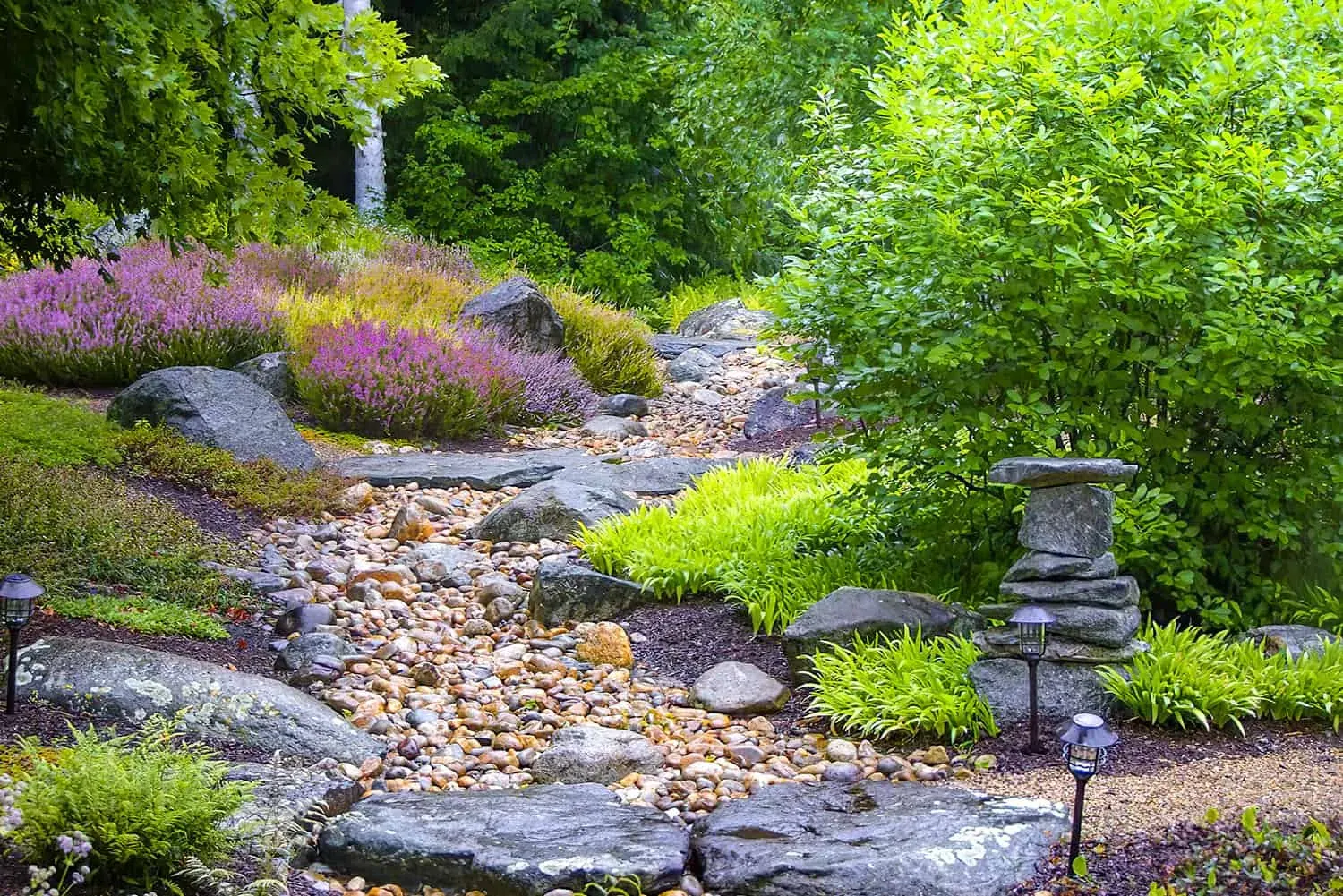
You start a zone on a bench lot in Moultonborough and the rotor at the top of the slope throws cleanly across the lawn while the band halfway down the hill looks pale by the third cycle of the week. At the toe near the stone walk to the dock, soil stays soft enough to hold a heel print long after the rest of the yard has dried. On a shoreline grade in Meredith and Center Harbor the controller program still matches what the installer set for a flat suburban chart, and the plants at the top of the bed get foliar wash while roots at the bottom never see the same minutes. None of that is a mystery controller. It is slope physics meeting spacing assumptions that were never written for lake front grades.
This article is for homeowners on sloped Lake Winnipesaukee lots and steep inland yards in Belknap County who want even coverage without fighting dry stripes and soggy margins all summer. Belknap Landscape provides irrigation service, property maintenance, and landscape construction when zones need rebuilding. Walk every zone for the first five minutes of its run. Date photos. Compare wet and dry bands before you change run times alone.
Why Flat Spacing Charts Fail on Shoreline Grades
Spray heads and rotors are rated for throw distance on level ground. Add even a modest slope and precipitation rate changes foot by foot. Water at the top of a run may infiltrate slowly while the same volume arrives too fast at the bottom and runs off before roots absorb it. Overlap measured at the head often reads as head to head on paper but mid slope you see a dry wedge where neither arc quite reaches.
Write one line per zone: approximate percent grade, which direction water flows, and whether the zone mixes turf, beds, and pavement. That line tells you whether to tweak deflectors, split the zone, or fix grade before you chase controller minutes. Pair the walk with our irrigation controller and mulch handoff guide when growth and mulch mask heads after startup, without repeating the same mulch thesis here.
Dry Bands Mid Slope Versus Wet Toes at the Bottom
Dry bands halfway down a slope usually mean throw shortens uphill or arcs do not intersect at the same elevation. Wet toes at the lake edge or walk landing usually mean runoff collects where grade flattens and the program still delivers the same precipitation as the top of the hill. Photograph both problems on the same zone. If one zone shows both, splitting upper and lower schedules often beats doubling run time on a single program.
Flag whether foot traffic also compresses the wet toe. Irrigation and wear stack on the same band near dock stairs and deck landings. Fixing spray without noting traffic geometry sends you back to pale turf in three weekends. Compare with turf care context when the issue is species and compaction as well as water.
Rotors, Spray Heads, and Precipitation Rate on Slope
Rotors apply water more slowly over a larger area. Spray heads apply faster over smaller arcs. On steep faces, fast precipitation on spray zones often runs off before infiltration unless run times are short and cycled. Rotors may need nozzle changes or deflector adjustment so throw reaches mid slope without flooding the toe.
Stand at each head during operation. Note wind off the water in cove lots toward Wolfeboro and Alton Bay or open fetch in Gilford and Laconia. Wind skews overlap the same way slope does. A head that cleared a shrub at startup may now water only foliage after spring growth. Trim or adjust before you blame the clock.
Overlap Checks You Can Do Before You Call
Place catch cups or even straight sided cans on dry bands and wet toes if you want numbers. For most homeowners, knee height video of each arc for one full rotation is enough. Mark dry wedges with a flag. Mark soggy toes where algae or moss starts. Send the controller brand, model, and zone number with each photo.
Check that heads are level and risers are not cracked. A tilted head throws uphill and underwater the band below it. Plow nudges from winter show up at thaw and get worse by guest season if nobody resets the stem. Maintenance can often straighten and clean without opening a trench.
What Maintenance Can Adjust Without Trenching
Weekly property maintenance and dedicated irrigation visits handle a long list on slope lots: head height and level, deflector clips, clogged screens, minor nozzle swaps, clearing mulch from rotors, and reporting cracked risers. Staggered start times on a single zone can reduce runoff when the bottom toe ponds before the top band drinks.
Ask the crew to flag zones where shrubs block throw so tree and plant health pruning can restore spray planes without changing programs. A reduction cut a few inches above the arc often restores overlap faster than adding a new head.
When Construction or Zone Rebuild Belongs in Scope
Some slopes need more than tweaks. Terracing, drainage work, new laterals, or separate valves for upper and lower faces belong in landscape construction when runoff still aims at a foundation or stair landing after adjustment. Shoreland rules shape how grade can change toward the water. Loop design and permitting in before equipment is scheduled.
Rebuilding a zone is also the right moment to separate turf, beds, and pavement that should never have shared a clock. Pavement and lawn on one slope zone almost always trains wet toes and dry mid bands because infiltration rates differ. Splitting zones costs more once than fighting the same pattern all summer.
Pairing Irrigation Fixes With Evening Safety
Wet treads near deck stairs and dock landings are a lighting problem and a water problem. Soggy stone reads darker at dusk even when fixtures are new. Read deck stair lighting and path width before guest evenings when guests navigate transitions after sunset. Dry surfaces and aimed light fix both parts of the problem.
The Packet You Send Belknap
Send town and slope context. Send wide shots of each problem zone. Send video of each head arc with dry and wet bands flagged. Send the zone list that disappointed you last summer with one line per zone. Send whether quiet mornings matter and when guest traffic peaks.
Belknap Landscape has adjusted and rebuilt irrigation on sloped shoreline lots across the Greater Lakes Region since 1988. Honest overlap on grade beats doubling run time and hoping the toe forgives you. Contact us with dated images when you are ready.