
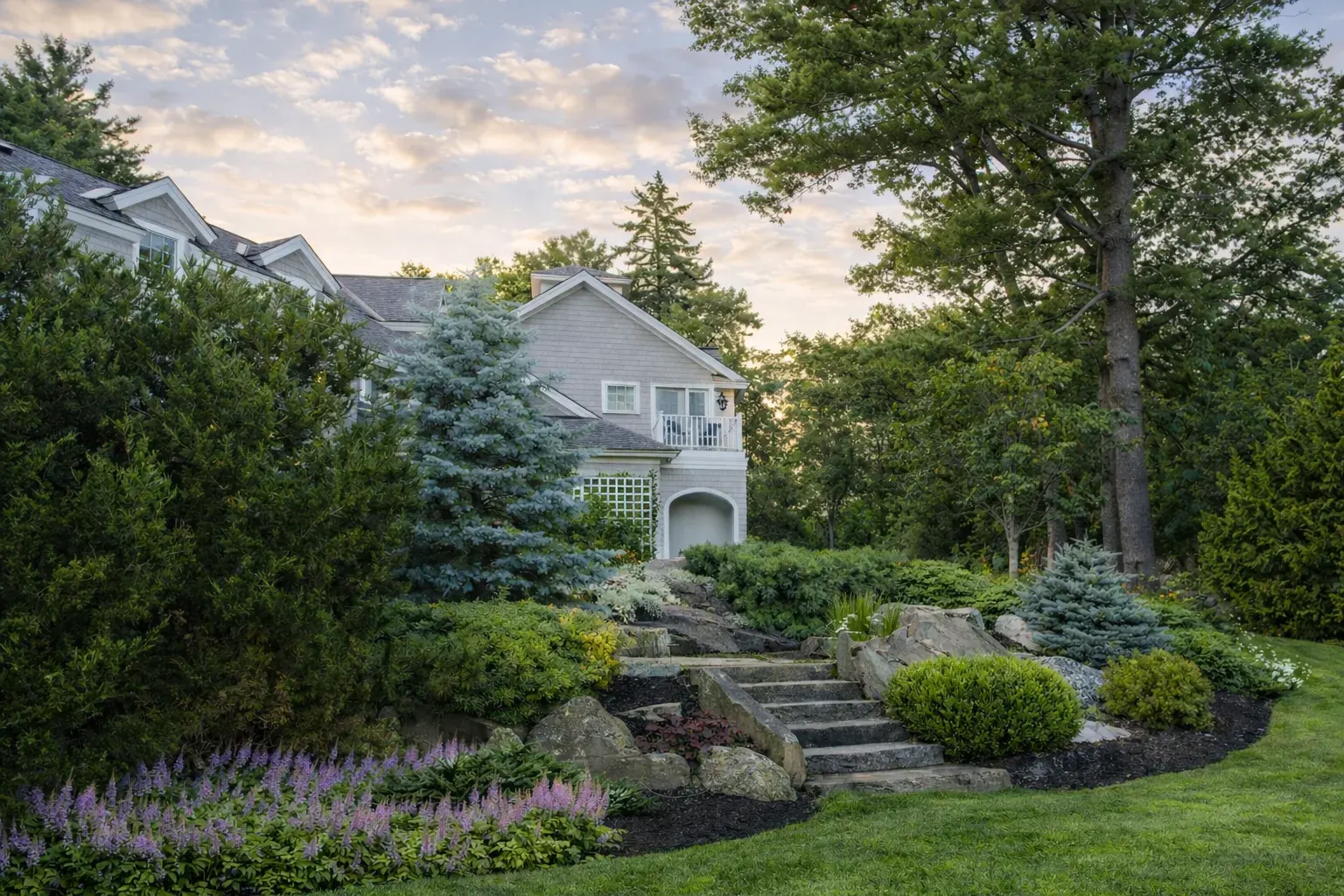
If your yard looks great for a few weeks in June and then starts fighting you the rest of the season, that usually comes back to a handful of landscaping mistakes, not bad luck. In New Hampshire, your property can deal with spring mud, hard summer sun, plow piles, freeze-thaw movement, and lake moisture in the same year, so small decisions get exposed fast.
1. Skipping a real plan and buying plants on impulse
This is the mistake that starts most of the others. You head to the garden center, spot a few healthy-looking shrubs or perennials, bring them home, and then try to find places where they sort of fit. It feels productive in the moment. A season later, the yard looks pieced together, the spacing is off, and some of those plants are already struggling.
A simple plan saves money faster than almost anything else in landscaping. Not a fancy full-color blueprint, just a real layout that accounts for beds, lawn, walkways, privacy, drainage, views, and how much upkeep your yard will actually need. Even a quick sketch on paper helps you notice where people naturally walk, where water sits after rain, and what you see from the kitchen window or front entry.
The catch is that impulse buying makes every decision backwards. Instead of choosing plants to support the yard, you end up forcing the yard to accommodate whatever happened to be on sale that Saturday.
What a basic landscape plan should include
At minimum, your plan should show where you have full sun, part shade, and deep shade. It should mark wet spots, slopes, large existing trees, utility lines, and areas that take snow load or plow impact in winter. It should also account for mature plant size, not the small container size sitting at the nursery.
Just as important, your plan should reflect how you use the yard. Maybe your front entrance needs cleaner access in winter. Maybe your backyard needs more privacy from a neighboring lot. Maybe your side yard is just a pass-through and does not need elaborate planting. A good landscape plan starts with real use, not wishful use.
How this mistake shows up in new hampshire yards
You can see this one all over the Lakes Region. Random foundation shrubs get tucked under windows with no room to grow. Beds near driveways disappear under snowbanks every winter. Patio and walkway placements ignore frost movement, then joints shift and edges heave after a couple of freeze-thaw cycles.
In a place like Gilford, one side of your property might bake in afternoon sun while another stays damp long after a storm. If the plan never accounted for that, the yard starts looking uneven fast. One bed thrives, another stalls, and suddenly you are replacing plants instead of improving the property.
2. Putting the wrong plant in the wrong place
This mistake costs more than almost any other one. A plant can be healthy at purchase, professionally installed, watered faithfully, and still fail because the site never matched what it needed.
“Right plant, right place” sounds basic, but it gets ignored constantly. It means matching sun, soil, moisture, wind exposure, and winter hardiness to the plant. Not just choosing what looks good on the tag in May. If a plant wants sharp drainage and full sun, it will not suddenly love a soggy shaded corner because that is where you had space.
Pretty plants fail all the time for boring reasons. That is usually the story.
Sun, shade, and exposure are not the same across your yard
One property can have several microclimates, meaning small zones with different growing conditions. Your front yard might get six to eight hours of direct sun, the back bed might lose light by early afternoon, and the area near the driveway might stay hotter and windier because of reflected heat and open exposure.
The same thing happens near lakes, open lawns, stone walls, and wooded edges. Wind dries out soil faster. Shade keeps spring soil cooler and wetter. Reflected heat from pavement changes what survives near a walkway or apron. If you treat the whole yard like one condition, your planting choices start failing one section at a time.
Lakes region conditions that change the equation
New Hampshire adds a few wrinkles that plant tags do not always explain clearly. Rocky soil can limit root growth. Drainage can swing from soggy in April to dry and stressed in July. Road salt can burn foliage and damage soil near driveways. Heavy snow can bend or break shrubs that look perfectly fine in summer. Cold winters matter, obviously, but winter exposure matters just as much.
A shrub that handles cold may still hate wind. A perennial that blooms beautifully inland may sulk in a damp lakeside bed. Deer pressure changes the equation too, especially when winter feeding gets rough. Picking plants for looks alone is like choosing winter boots by color and ignoring the sole.
3. Ignoring soil quality and drainage before planting
When plants struggle, the plant often gets blamed first. But here’s the thing: the real problem is often below ground. Compacted soil, meaning packed-down soil that roots and water cannot move through easily, causes more frustration than most people realize.
If your topsoil is thin, your subsoil stays wet, or your planting area was churned up during construction and then packed down, roots never get the kind of start they need. Shrubs sit in water. Lawn seed washes away. Perennials limp along without ever really establishing. Then you end up replacing plants that were never given a fair shot.
Testing and improving soil before installation is not glamorous, but it pays back every season after that. It is easier to fix grade, drainage, and soil structure before planting than after beds, lawn, and hardscape are already in place.
Signs your soil or drainage is the real problem
Some clues are obvious. Water puddles after a rain and sticks around. Parts of the lawn stay bare no matter how often you seed. A slope erodes during storms. Shrubs yellow for no clear reason, even though watering seems fine.
Other signs are subtler. Roots can sit in saturated soil without obvious standing water on the surface. Beds near downspouts may alternate between swampy and bone dry. In spring, some areas stay muddy long after the rest of the yard firms up. That pattern tells you something important: the site conditions are driving the problem.
Fixes that should happen before, not after, installation
If drainage is poor, grading may need to change before you plant a single thing. That can mean redirecting water, adjusting slope, adding drainage where runoff collects, or correcting low areas that trap moisture. If soil is weak, compost and other soil amendments can improve structure and help roots spread more naturally.
Sometimes a full rebuild is not realistic, and that is fine. In those cases, the smarter move is to work with the site instead of fighting it. Use plants that can handle wet pockets, dry slopes, or lean rocky soil where those conditions already exist. Trying to force every part of the yard into the same condition usually turns into an expensive cycle of replacement.
4. Planting too close to the house, walkway, or each other
This one almost always looks fine at first. In fact, it can look tidy and polished on day one because everything feels full right away. Then year three shows up, and the shrubs are pressing into siding, branches block the walkway, and half the bed is competing for the same space.
Mature size matters more than nursery size. That one-gallon shrub does not stay cute and compact just because it arrived that way. Trees need room for roots and canopy spread. Foundation plants need air, access, and distance from the house. Perennials need enough breathing room that they do not turn into a tangled mass after two growing seasons.
Why “it fits right now” is the trap
A small shrub in a nursery pot is like buying shoes for a toddler and assuming that size will last forever. It tells you almost nothing about the space that plant will need later.
The temptation is understandable. Wide spacing can look sparse at installation, and tight spacing delivers instant gratification. But that early fullness comes at a cost. You either spend the next several years pruning constantly, or you rip plants out long before their natural lifespan is over.
Problems overcrowding creates
Overcrowding affects more than looks. Poor airflow raises the odds of mildew and other plant health problems. Roots compete harder for water and nutrients. Dense plantings stay wetter after rain, which can invite disease. Windows get blocked, siding gets scraped, and walkways feel cramped.
Hardscape suffers too. Roots can lift edges, lean into retaining borders, or push against paving over time. Even simple maintenance gets harder when every bed is overstuffed. Mulching, weeding, trimming, and cleanup all take longer because nothing has room to breathe.
5. Treating watering like a routine instead of a response
A lot of watering habits come from good intentions and bad timing. You want the yard to stay healthy, so the hose comes out every evening or the irrigation runs on the same schedule no matter what the weather is doing. That feels consistent. It is not always helpful.
Newly installed landscapes do need regular establishment watering. Fresh trees, shrubs, and perennials have limited root systems and cannot fend for themselves right away. But established plants are different. Constant shallow watering trains roots to stay near the surface, where they dry out faster and become more dependent on you.
The better approach is to water in response to conditions, not by habit.
Common watering mistakes
Daily light sprinkling is one of the biggest ones. It wets the top inch or two and then evaporates, especially in summer. Watering in the heat of the day wastes moisture and can leave you chasing the hose without really fixing drought stress. Ignoring rainfall creates another problem, because a rainy stretch in June does not need the same schedule as a dry spell in late July.
A lawn, a shrub border, and a perennial bed also do not need identical treatment. Lawns often need broader, deeper watering. Shrubs usually prefer deeper, less frequent soaking. Perennials vary widely by species and site. Treating everything the same is convenient, but convenience is not the same thing as good irrigation.
Smarter watering for new hampshire weather
New Hampshire weather makes this especially obvious. Spring can be saturated, with soil already holding more water than roots want. Then July shows up with heat and dry stretches, and suddenly the same bed dries out fast. A fixed schedule cannot keep up with those swings.
Mulch helps more than people expect because it slows evaporation and keeps soil temperatures steadier. That means less panic watering in the evening after a hot day. The trick is to pay attention to the soil a few inches down, not just the dry-looking surface. If the root zone still has moisture, more water is not helping. If it is dry below the surface, a slow deep soak does more good than five quick sprays.
6. Designing for one season and forgetting the other three
A yard built only around summer bloom has a short peak and a long off-season. In New Hampshire, that is a problem because the off-season is not brief. You see your landscape in muddy April, bright October, gray November, and snow-covered January. If the whole design depends on a few pretty weeks in early summer, the rest of the year feels empty.
Four-season interest does not mean every corner needs to look dramatic in every month. It means the yard still has structure, texture, and visual weight after the flowers fade. That can come from evergreens, bark, branching form, seed heads, ornamental grasses where they make sense, and hardscape elements that still look good under snow.
A yard should not disappear the moment the blooms are done.
What four-season interest actually means
In simple terms, it means something is doing a job in every season. Spring brings fresh growth and early color. Summer carries bloom and fullness. Fall adds foliage color, berries, or texture. Winter relies on shape, evergreen presence, bark, and the bones of the design.
That last part matters most in northern landscapes. In January, your walkway, stone steps, retaining walls, boulders, and evergreen anchors do a lot of the visual work. Bare stems and flattened perennials will not carry the whole property for months.
How to avoid the “all june, nothing else” yard
The easiest fix is variety with purpose. Mix bloom times so everything does not peak at once. Use evergreen shrubs or trees to anchor beds in winter. Add plants with interesting bark, fall color, or berries that hold after leaf drop. In the right spots, ornamental grasses can soften hardscape and still look good into colder months.
Hardscape helps too. A clean stone walkway, a well-placed retaining wall, or a patio edge with good lines adds structure year-round, even when snow piles up around it. In a New Hampshire yard, those permanent features often carry more visual value than people expect.
7. Underestimating maintenance from the start
This is the mistake that ties everything together. A yard can be beautiful on install day and still become exhausting six months later if it asks for more pruning, cleanup, edging, watering, mowing, and seasonal care than your schedule can support.
The best landscape is not the one that looks perfect for one month. It is the one you can actually keep up with. That means your plant choices, lawn size, bed layout, and hardscape details should fit your real life, not the version of it where you somehow have endless weekends and perfect weather.
A high-maintenance yard has a way of turning into a neglected yard. Then small issues get expensive.
High-maintenance choices that cause burnout
Oversized beds look generous on paper but create long weeding and mulching sessions. Fast-growing shrubs promise quick privacy, then need constant pruning to stay in bounds. Too much edging means extra trimming every time the lawn gets mowed. Fussy plants add repeat replacements, spraying, staking, or special winter protection.
Awkward lawn areas cause problems too. If mowing a slope feels sketchy or squeezing around tight curves turns every pass into a chore, that part of the design is asking too much. A yard should not require a whole strategy session every time you maintain it.
How to build a yard that stays manageable
Simpler bed shapes are easier to mow around and maintain cleanly. A realistic lawn size cuts work immediately, especially in awkward side yards or hard-to-reach corners. Mulch in the right places suppresses weeds and helps hold moisture. Durable plants that match your site reduce replacement, pruning, and stress.
Sometimes the smartest move is getting help before small issues snowball. Plant health problems, drainage trouble, failing hardscapes, and seasonal cleanup all get more expensive when ignored. If your property needs support with lawn care, hardscape work, planting, or ongoing maintenance in the Lakes Region, early attention usually saves far more than a full reset later.
The common thread behind most landscaping mistakes
Most landscaping mistakes come from rushing, guessing, or copying a yard that lives in different conditions. A planting that works on a dry sunny lot in Meredith may struggle on a shaded damp property a few miles away. A tidy bed near the road may look good in August and get buried under winter snow storage by January.
Your yard needs solutions based on your sun, your soil, your drainage, your exposure, and how you actually want to use the space. Once that clicks, landscaping gets a lot less frustrating. You stop treating symptoms and start fixing causes.
Start with the one problem your yard keeps showing you
If your yard keeps sending the same signal, standing water, crowded shrubs, patchy lawn, plants that never really settle in, start there. One smart fix often changes more than you expect because the problems are usually connected.
Try one thing first: solve the drainage issue, rework the spacing in an overcrowded bed, or stop forcing a plant into the wrong spot. When that one pressure point gets fixed, the whole landscape gets easier to manage, and a lot more enjoyable to live with.
Disclaimer: This article is for general informational purposes only. It is not professional advice, a quote, or a service agreement. Conditions at your home or property may differ; contact a qualified professional for an on-site evaluation before making repair, safety, or spending decisions.